Archive for the 'A Day in the Life' Category
(Less Than 2,000) Socialists of New Jersey Unite!
Today, I had the rather surreal experience of voting in a New Jersey voting booth. It was surreal because I felt like I was at John King’s touchscreen on CNN, pressing things on an oversized board to make them light up. It was fun.
It sure beats the heck out of Alameda County’s old fill-in-the-blank-with-a-pen-till-you-run-out-of-ink system. The green lights were very clear and made it obvious where and how to vote. Em said she worried that her big board display may have been misaligned or just gone off into the ether, but I think it’s just as easy to burn or discard paper as it is to fail to count something.
My vote really counted, today, though, because I was more than 0.05% of a movement! At current tallies, with 99% reporting, only 1,987 others joined me in voting for Gregory Pason for Governor of the great state of New Jersey. It looks like he’ll finish 9th (of 12 candidates).
I considered voting for Chris Daggett, the independent candidate you’ve heard of in the race. Despite poll numbers topping out at around 18-20%, being widely regarded as the aggregate winner of the debates, and the endorsement of the largest NJ-based paper, Daggett’s running a disappointing 5%+. He still beat Pason by a margin of about 66:1.
I liked Daggett as an independent vote, as a third party (rather than, say, a ninth party), as the man who won the endorsement of the Sierra Club and supports a lot of reasonably progressive things. But ultimately his focus on tax reduction and reshifting burdens to regressive methods was just too onerous for me to sign on to. While I liked his impact on the campaign, I wasn’t really convinced that I’d like him as Governor, and thus voting for him would just be piling on to someone who people had heard of the same way most voters pile on to someone they think has a chance of winning. Not the way I prefer to vote.
So I supported Pason, a man whose portion of the overall vote count was almost as small as my vote was a portion of his total support. There are about two-thousand people who would prefer socialism at this time in New Jersey, at least of those voting and bothering to show up for something like this, and those not choosing to compromise their vote or voice in some way or another.
It seems to bear recognizing at this juncture in history. I’m not saying Jersey will change or anything will, but it’s worth at least recording how things stand tonight. But the next time you hear anyone accused of socialism, it might bear noting how many people are actually supporting socialism, real socialism, these days.
And then you can tell them that you know a real socialist. If you don’t mind not speaking to them again.
Assessing October
October 2009 is one for the ages.
It wasn’t the spookiest October, though one could easily argue that the moment I resigned myself to death made this the literally scariest October on record. Certainly one hopes that this much abject fear is not revisited frequently. And the renewing inspiration of surviving what looks like a deadly threat is always worth experiencing… it had been since May 2005 that I’d had a near-death experience!
It wasn’t the most volatile October by any stretch. Most any prior month seemed stormier for one reason or another. Not that this was devoid of ups and downs. The obvious aforementioned down aside, Em struggled with a more difficult time in grad school than anticipated and I flitted between exhaustion, frustration, and excitement in wrestling with my book and getting some perspective on debate coaching.
What it might have been, almost certainly was, was the most productive October ever. And given that October tends to be high-energy and high-productivity for me, that is saying something. I have tended, the summer of Loosely Based aside, to write more in October and to feel more inspired during the month than any other time in the year, although March tends to be competitive. But this October, though there are about 38 hours remaining in the month (that I won’t be writing during), I have written 34,533 words of American Dream On, making it arguably the most prolific month of my life. That’s over 1,100 words every day, on average, counting several days of no writing. It’s also ~138 pages total, putting me on pace to write well over 1,500 pages a year at this pace. Not that I’m saying I can keep that up, but at the same time, it makes my 3 books/year aspiration look pretty manageable.
American Dream On now stands within 1,000 words of Loosely Based, meaning the next writing session will almost certainly make it the longest piece I’ve ever written. The target size is increasing a bit over time, standing now in the vicinity of 125,000 words as I try to tie everything together and leave myself enough time to explain things. It may run longer as I’m thinking I may need 65 chapters instead of 55, which may even put my December 15th deadline in some jeopardy, though this can be mitigated by stepping up my game. After all, I’ve hardly felt like I’m writing at a breakneck pace. This has actually felt pretty comfortable, pretty sustainable. I’ve likened it to cruise control. I think I could get closer to 50,000 words a month if I really pressured myself.
I know I’ve talked about all this a lot, that I’m probably becoming a rather dull stuck record on the numbers games, writing, and the issues entailed therein. But the discovery of this productivity, really unfolding and getting into high gear this month, is almost certainly the second most exciting discovery of my life (behind finding Emily). The idea that I could conceivably write six books in Princeton, creating a serious portfolio for myself after nearly three decades of struggling with endless ideas and only one manuscript, this makes my whole life seem worthwhile. Let alone if any of those six books catch on, securing some sort of life for myself in this state on a permanent basis.
I’m trying (and failing, evidently) not to get too far ahead of myself. One book at a time, one idea. This book, being in the works for eight years, is certainly going more quickly than something that I just came up with might. It may prove to not be very good when I get around to editing – I can already anticipate that it will require more revision than LB did. There’s a lot of slogging to come and I can’t imagine that I’ll really end up averaging 1,000 words a day over 365 days.
But it’s possible. And after going to sleep at night for the better part of three decades asking myself what I’ve accomplished, telling myself that I’m falling short of my potential, it’s a mighty fine change. I somehow think it would be hard to keep up that narrative for myself if I wrote 4-6 books by the time Em’s done with her program. So, yes, one book at a time. But I can start to see the light on the edge of my life and it feels like the culmination of most everything that’s ever mattered.
And I can’t wait to have people start reading.
UPenn this weekend – debate has given me the perfect break and pacing and interspersing my secluded life with real human contact and discussion, just as planned. Very excited about the teams that are going and the potential to do well. Every weekend, like every book or chapter, is a new opportunity to maximize potential, to start fresh. Every round one starts with the possibility of winning the tournament. It’s amazing how easily I’ve been able to manifest my own need for competition into the vicarious joys of coaching. Maybe not that amazing, if one thinks about how competitive coaches can be, but it’s a relief for me that I don’t feel a big void from not competing. And if I start to, there’s always APDA Cup.
If you need me, I’ll be in the rented 2010 red Corolla with a spoiler and a sunroof. I miss the Prius already.
84,202
I love how a bad day can be salvaged by a good session of writing.
I love how I can transform from feeling utterly unproductive, a blob waiting around for nightfall and wondering why I’m squandering my time, into the most productive joyous person graced with a ticket to hang out on Earth.
Most of my days aren’t bad now, most of them have been productive in their own right with shorter works or web projects or just taking care of the household chores. But when they are, what a nice surprise it is to be saved by the “work” of these days. How strange would it have been for any prior job to save me in this way? To keep me going when the chips were down in other parts of life, even if for only a day at a time?
This must be what it means when people say they love what they do.
I spent the better part of a decade, let alone what kind of a use of time even more years at school were, spinning wheels at pseudo-productive pursuits while somehow claiming that this prevented me from doing what I really felt driven to do. Always apologizing to myself, others, the world at large, my earlier years, that I wasn’t able to be productive, wasn’t on the road I needed to travel.
How satisfying, then, that this is what’s going well in my life now. That this, my work, is the antidote to any troubles that arise.
I hope this doesn’t sound like bragging. I hope it sounds like inspiration. To you.
Persisting
My head has hurt most of the day, I’ve been sore, and I’ve been trying to convince myself that the doctoral advice to rest was indeed on the mark. I’ve been reading and watching TV-on-Netflix and generally grumping about, worrying about the “soft batch” spots on my head and wondering how I managed to bruise it without actually hitting it against anything. It’s an external couple of bruises, not a concussion, and the idea that whiplash could bruise the outside of one’s head is just baffling to me.
Nevertheless, I know that getting back on the writing horse is just as important as getting on the driving horse as soon as I can. And last night I wrote, but I felt pretty bad about what I wrote. It was so choppy and challenging that at times I was wondering whether I had sustained more head trauma than I initially thought because it was clearly impacting my writing. I slogged through, but I still think that section is going to need some major reworking.
Tonight, thankfully, despite hours of wasted time and false starts, I finally got a really solid chunk done, pushing toward nine pages, all some of the smoothest and sharpest production of the whole novel so far. The work stands at over 82,000 words, closing in on Loosely Based for the longest thing I’ve ever written. I’m maintaining a pace to get the thing done early and at a clip around 1,000 words a day, every day since I started writing it again.
There was a pumpkin party in there too, thanks to a lot of help from our friends and the ability to reserve the community room at the Butler Apartments when the weather is inclement. Probably a story best told in pictures, which we don’t have that many of since we ran the camera batteries out taking snapshots of the accident. I am tempted to post some of those too, once I’ve put a little more time between myself and the incident (and I should probably get some kind of insurance sign-off that it’s okay). We had a great time at the party, but the timing has been a bit exhausting. Very stressful for Emily, who is up against midterms this week.
This is mostly just a little recap post, the chaff of another great writing session and further crystallization of my gratefulness, both for being alive and for being able to recover on the writing front while so much else still feels stalled out or downright lousy. As unfortunate as it would have been to die, it would have been perhaps worse to suffer severe brain damage. So I am thankful not only to be here, but to be able to continue doing what I feel I have long been called to do.
And now, for the moment, I am called to rest.
Sometimes I’m Happy Just to Be Alive
My day was spent differently than I originally envisioned it.
It started with an afternoon trip to the pumpkin patch with friends, as expected. This was a prelude to tomorrow’s 4th Annual (1st on the East Coast) Pumpkin Carving Extravaganza. We were preparing to acquire a bunch of pumpkins and then head out to do party shopping and come home to decorate.
Everything was going pretty well up through being on our way to go shopping. We had plenty of pumpkins and had really enjoyed our time at the pumpkin patch/farm/market place where we’d gone. We were in high spirits and already anticipating the day to come.
I stopped at the first red light after the patch, and was looking to my left to see when I might have an opening to make a right turn. I thought there might be enough of an opening, then hesitated and decided to wait for the next cars to pass. A black pickup truck was coming toward me and then threw on its turn signal to go right. I thought this would possibly make an opening, so I looked behind the pickup to make sure the trailing car was slowing down enough to give me time. I noted with alarm that they were actually accelerating toward the truck. I expected them to start to veer left around the truck at their increasing speed, but instead they drifted right, picking up speed while climbing the grassy shoulder. Then they suddenly took out the corner street sign and I turned away to brace for impact.
It came.
They smashed into the back part of the right side of the pickup, which had almost fully completed its turn, sending the pickup straight into the front corner of our car. I didn’t see what happened to the out-of-control car next, but it somehow ended up crossing the opposite lane of traffic, taking out a mailbox, and winding up crashed into a tree.
I felt for any major damage to myself and noted none, then turned to Emily and asked “Are you alive?” She was, and largely unhurt, and then I looked up to the driver of the pickup. He opened his eyes and looked at me dazedly. Emily and I discussed what had just transpired and I explained it to her since she had seen none of it coming. We left the vehicle, talked to the pickup driver, who proved to be mostly all right, then tried to assess what had happened. A couple of bystanders went over to see if the person in the out-of-control car was okay.
She attested to blacking out and having no memory from seeing a green light in front of her to seeing the tree in front of her on the other side of the road. Somehow she too was generally unharmed. All three vehicles were in really bad shape and everyone had some neck pain and such, but it was a generally amazing survival of the worst situation I’ve ever faced in a motor vehicle.
The thing that’ll stay with me most, assuming that the negative x-rays were accurate and my soreness eventually fades, is that split-second between seeing the street sign go down and the cessation of the impact. In that moment, which was both slow and fast just like you’ve heard (or felt) such moments to be, I had to prepare to die. That feeling of resigning, of yielding the fate of one’s life, is not one I’ll forget soon, or perhaps ever. I was completely out of options – there were cars behind, on my left, and in front. There was no where to go that would not increase the danger of the situation. There was no time to react. All I could do was cede control to the forces already in motion and hope for the best.
There’s no telling the fate of the car, which was towed and will be dealt with by insurance companies and the dealership. I was surprised at how late I got concerned with and upset about the fate of the car – it had been several minutes before I thought about it being unfortunate that our car may be totaled. I was probably more concerned with it catching fire or blowing up and creating a new round of jeopardy well before I thought to be upset that the car was wrecked. It was enough to have spent a second preparing to leave the planet and reopening my eyes to find I was still here.
I have a feeling this pumpkin-carving party is going to be even sweeter than normal.
Words, Words, Words
So, there’s this thing called Wordle that I just discovered on Facebook, which allows you to analyze any piece of writing or webpage for commonly occurring words. Then it spits out something like this:

Pretty neat stuff. My big complaint is that it doesn’t draw on the whole history of the blog, but only the very recent history, which is why this thing reads mostly like a schizophrenic recap of my last substantive post.
I am wholly torn between my temptation to plug in the entirety of American Dream On and the concern that it would somehow find a way to capture it or just fail to function under the weight of 76,000+ words.
Maybe trying Loosely Based would be a good compromise…
Good Tired
I woke up early today (really yesterday, but you know my schedule) because a friend of mine was coming over. Early these days is around ten or so in the morning.
My friend (Ariel) and I met up with Em for lunch, who had already completed a couple classes in the morning. We relived old times we never had at the Frist cafeteria, imaging the student center of Princeton to be the basement of Usdan. With the new student center, even the basement of Usdan isn’t the basement of Usdan anymore.
We then proceeded to the Chancellor Green Library, undoubtedly the coolest interior space on the Princeton campus we’ve yet found. Most people, upon seeing it, immediately dub it the “Harry Potter Room,” though that distinction arguably might be more apt for the Grad College cafeteria, which generally looks primed for an address by Dumbledore himself. In any event, Chancellor Green is an octagonal room with two floors topped by an ornately woodworked dome, adorned with stained glass and bookshelves galore on each level and each edge. Below are comfortable reading chairs and above study desks. The expectation is silence throughout, if not to read than merely to appreciate the hallowed halls surrounding.
I rejoined my Russian friends in Toltsoy’s world, lamenting how little I’ve been able to read amidst the writing lifestyle I’ve developed. Some have said that one should never be writing at a higher volume than one is reading, but I feel that writing takes its toll on the desire to read. Besides, most of my reading is usually done either during a commute or just before sleep. I have no commute and I’m going to sleep after writing sessions that leave me utterly drained as dawn is threatening to break. Yeah, not exactly conducive to reading.
So I appreciated the opportunity to bury myself in a book for the afternoon, spending hours with 75 pages of the world’s most reputedly epic tome. Having discussed my general progression of becoming a slower reader for much of high school and college with Ariel, I was grateful to have sped up enough in subsequent years that I could read at such a pace. There was a time that I was convinced I would someday have to take whole days to read just a single page at the rate I’d been going.
Then home, phone calls, dinner, a brief time with Em as she worried over the day to come and we finally caught up to the current episode of “The Office”, having traversed the show’s entire history with frightening alacrity via Netflix and Hulu. Not everything I’ve done out here in Jersey can be strictly described as productive.
And then writing, the whole of chapter 35, a chapter I’m profoundly fond of suddenly, unanticipated in its depth and implications, all the more satisfying for how much it surprised me. There are chapters I know are going to be powerful, momentous, vital. Some have already passed. This one I wasn’t expecting and I deeply appreciate the characters therein for revealing themselves to me in this way. Really.
And here I am, just this side of five in the morning, worn out and really content. Not content as a proxy for slowly settling into the sediment that one’s life has become, but content in its truest, highest form. Not happy or elated, for I lack the energy for either. Just satisfied, at peace with my place in the world. This life is everything I hoped it would be, for all its solitude and strange freedom. God help me find ways to never let go, now that I’m here.
Debate and Nuclear War
The final part of an 8-part series regressing through the Stanford 2002 APDA tournament.
Last week: Round 2 (re: chemical weapons)
Today’s round takes us back to the beginning of the tournament, the first filmed round of my career since the quarterfinals at Columbia, wherein Emily and I dismantled a case about China and Taiwan and then Mike Specian, APDA filmer extraordinaire, lost the tape. Before that, it might date back to Dartmouth 2000 outrounds or something, which I have somewhere and would love to get converted as well.
Regardless, this was a pretty fun case for first round. Involving one of my favorite movies of all-time, “Dr. Strangelove”, this case encouraged the speaker to conduct a full nuclear strike on the Soviet Union rather than trying to warn or negotiate with the Soviets. Suffice it to say that I had a little bit to say in response. Generally in debate, nuclear war is the worst-case scenario that everyone’s trying to avoid. When the Gov makes it their case statement, you know you’re going to have a good day…
Wired
As bad as I felt last night at this time is as good as I feel tonight. What a difference, as they say, a day makes.
I have just rattled off over 3,000 words (~12 pages) tonight, in a remarkably fast and focused session that has yielded what I am convinced is some of the best work of the whole novel so far. This brings American Dream On over the 70,000 word threshold (71,408 words/~285 pages) with just under two months to go and helps offset the fact that there will be no writing tomorrow night. It’s kind of too bad, because I’m in one of those grooves where baseball players find the ball looks as big as a grapefruit. Suddenly, after a week of angst, the dam has burst and things are flowing once more. (Though it probably doesn’t hurt that I’m on to a different chapter entirely, one that did not carry with it some consternating problems from the get-go.)
And Vassar pulled back on their threat to only break to semis, once again going with quarters, joining the ranks of virtually all modern tournaments. And it looks like I will be participating in the APDA Cup, thus getting a chance to compete in rounds that are adjudicated and are not demo rounds for the first time since 2006. (Yeah, I guess I thanked the BU Finals panel for judging my “last round ever”. Oops. We all know I’d debate professionally for a lifetime if I could.) And while I knew that this time yesterday too, it seems a lot more exciting today for some reason. Probably because the whole world does. And I’m almost short of breath and insanely full of energy for quarter till five in the morning, when I should be lapsing and a little tired. And given that the alarm’s set for 9:00 tomorrow, the earliest I’ve been up in weeks, to get ready to go to Vassar, this is all looking a little problematic.
But I don’t care that much, mostly because I’m in the throes of a manic phase of the sine-curve lifestyle. And the mania may be seen as problematic for some people, but I don’t know who those people could be. Being on the upswing of a roller-coaster, sailing upward on a high-energy high-productivity euphoria, this is about as good as it gets in this lifetime. I mean, yeah, the super-contemplative revelations are perhaps a little better, but this is a darn fine second place. I feel like running out into the middle of the early morning rain, whooping with joy at the fact that I get to be alive to see this kind of mood. I wish everyone could be here to feel this. I feel I’ve known people who never get this excited their whole lives.
I don’t know how I’m possibly going to sleep. It may end up an all-nighter and I’ll crash hard after round three at the tournament. But I should try all the same. Try to walk away from the euphoria to get a little shut-eye that’ll ultimately serve me well tomorrow. In the meantime, I leave you with this:
Wooooooooooooooooooooooooo!
Frustration
Chapter 32 may be long remembered as the one that got away. After four nights and just shy of 5,000 words, I think I can finally put it behind me (for now), but it’s taken its toll.
A lot of how I feel about all this is the fault of the ease with which I’ve been able to settle into the writing life again. I’ve been remarking to everyone how amazingly things have gone, how smooth its all felt, how quick the transition was from moving in to writing full-time. Everything’s been a piece of cake, so the slightest change in the wind looks like a big problem. And compared to serious writer’s block or something truly problematic, it’s not at all. It’s just a vaguely exasperating series of things to write.
It’s hard to discuss exactly what’s frustrating about this chapter without divulging far too much of a plot I’ve kept close to the vest for over half a decade. But a lot of it’s about pacing and timing and trying to cram a whole lot of events into a small space when I haven’t necessarily been on a pace to do so. To make it seem smooth and effortless and intended. To realize that one has written oneself into a bit of a corner and then figure out how to delicately extricate without rewriting half the book.
Ultimately, it’s good for me. Every word written makes you stronger, even if most of those words will probably be rewritten. The chapter felt less elegant, less muse-inspired, pretty much throughout. There were some good turns of phrase and some moments, sure, but it’s just not my best work. On a first draft, though, holding the whole piece to the standard of best work means blowing deadlines. And today is significant on that front: exactly 2 months to the day till the deadline. December 15th or bust, come what may.
The context for the whole chapter is probably a big part of it – it just hasn’t been the best week. Coaching hit some of the first snags, with a low-energy meeting punctuated on either end by low attendance and frayed nerves leading to rising tensions. It all came out okay (I think – we’ll see for sure at tomorrow’s meeting), but my hopes of a potential break this weekend were mitigated somewhat by the surprise announcement that this weekend’s tourney is breaking to semis, not quarters. I didn’t know any tournaments on APDA had broken to less than quarters in some time, so this was quite a shock and one I don’t relish discussing with the team tomorrow. Not that it precludes breaking; it just makes it twice as difficult.
And Em’s sick, given a cold in exchange for her (conventional, not swine) flu shot. Despite the protestations of the injectors, it’s pretty common knowledge that the flu shot gives people cold symptoms and these have hit Em particularly hard this go-round. I’ve been dancing on the edge of catching it from her, but hoping to escape healthy by the time we (the Rutgers team and I) head up to Vassar on Friday. The whole thing has brought our collective home morale down even further though, and it was already on the wane.
It’s just been one of those weeks, more headaches than necessary, writing like pulling teeth, anticipation of everything weighing me down a little. I need to get out and do more, but it’s getting colder and making retreat the more likely response. It’s weeks like this that I’m so grateful to not be working, since at least I can find solace in bulldozing the writing problems in front of me and working through things rather than the dissatisfaction of frustration reminding me how far I am from my life goals. And I’m not much closer, and feeling it, but at least I’m starting on the path. Which is good enough for now.
I just need to set some limits on how I distract myself, on how I keep my focus and stay sharp. Up till this week, it’s been easy, so it can be easy again. But the last couple days, nothing’s felt easy. It’s all been pulling teeth and the desire to pull hair. And now I’m repeating myself and probably frustrating you too.
Join the freaking club. Augh.
Crime vs. Convention
Part 7 in an 8-part series regressing through the Stanford 2002 APDA tournament.
Last week: Round 3 (re: Enron executives and their wallets)
Today’s round features one of my favorite opp-choice cases from my senior-year case-writing binge. The case was pretty successful, though it did lose handily once. It engaged in a question I generally didn’t believe in, that being the nature of war crimes. While I personally feel that the concept of “war crimes” is redundant, this case posed an interesting scenario as to whether a breakaway republic should use chemical weapons against an oppressive power if the power they’re fighting made those weapons.
This round featured the surprising choice that the republic should in fact use the weapons, which tended not to be the side opposition chose. Generally people sided with the Geneva conventions and conventional war over taking the risky but potentially effective move to break with international law and go after the power. But the round always made for fun international debate that didn’t rely on having just read the Economist.
This round also features one of my more absurd themed rebuttals, something that was generally my signature, but rarely had such tenuous links as this one.
It All Makes Sense
This post is an antidote, a message in a bottle, a documentation of a sensation and a perception about the world that is here and irrevocable. It’s something that I may lose, but no one can take away from me. And this is me, planting my flag, staking my ground, putting forth my chronicle of feeling this way and knowing these things at this time.
It all makes sense. All of it. What happens, what doesn’t, when, why, how. We are all so blessed and so privileged to be able to participate, to take part in this experiment with free will and this existence that is at once driven by our own whims and yet interminably destined to make itself work. It is punctuated by tremendous pain, yes, and tremendous anxiety, but it is all so very worth it. And I can see the pain and see the past and I know that every bit of it is worth it for everything.
To have a planet so well designed as to bless us not only with our own will, but others’ perspectives, with the discourse and dialogue that distill into reasoned perspective and more holistic understanding – this is all amazing. That we can spend so much time lamenting our various fates is at once a testament to our urges to push forward and improve what we have been given and yet also an unfortunate lack of full appreciation. I think the sacrifice of appreciation is often worth the spurs of exhortation to future greatness, but I wonder sometimes if we (I) temper ourselves (myself) sufficiently with sheer appreciation.
Tonight, I have it. I feel it. I have traveled and talked and walked and watched and I am aware of it all and it is overwhelming and beautiful and perfect and in need of appreciation.
This is not the first time I have felt this way, nor, God willing, will it be the last. But it seems, at a point where so much of my life is coming together in ways that I have made for myself, among the most important. It feels like this time around, the profundity has a greater likelihood to infiltrate the rest of daily life, for daily life itself is more deliberate and attuned to the realities that matter.
Ultimately, all I can really say is that I’m happy. Without reservation or qualification, I bask in the offerings of life. And that, my friends, is not something I say or feel very often.
Obama Nobel Prize Win Inspires Irrational Exuberance Awards!
Russ and I worked all night to bring you this stunning awards show:
Enjoy. Tell your friends. Book your tickets on a dirigible!
Peace is Dead.
“You keep using that word. I do not think it means what you think it means.”
-Inigo Montoya, “The Princess Bride” (movie)
At this rate, Inigo Montoya is the leading candidate to win the 2010 Nobel Peace Prize. Sure, he’s fictional and is known primarily for making death threats. But the way things are going, that looks like an improvement.
As a nearly lifelong pacifist, I know a thing or two about peace. I know how rare my set of beliefs about the world and human interaction are. I know the joys of explaining to people why one wouldn’t kill the person whose finger was on the button to destroy the world or why killing in self-defense is still just murder you thought of after the guy who you’re killing. I know what an uphill battle the very concept of peace has in this world and how counter-intuitive it is to most people.
This is why it has always been great comfort and solace to me that a world so beleaguered and prone to violence has created (and recently) an award designed to honor my belief structure and those espousing it. Has recognized, with the prestige of the world stage, that peace is and should be a universal human goal and that making strides in achieving it is no more a pipe dream than progressing in medicine or scientific pursuits.
The history of the Nobel Peace Prize is certainly not perfect. They failed to recognize the world’s greatest pacifist of all time, only posthumously offering him acknowledgment once he’d been killed. They have a long history of giving pretty notorious killers the prize for either reforming (see most of the Israelis and Palestinians who have won it) or doing one thing out of the ordinary that’s peaceful (see Teddy Roosevelt and Henry Kissinger). While this isn’t my favorite practice in the world, there has always been a concrete step in the direction of peace, actual peace, that has justified the awarding of the prize.
Then in 2006, a funny thing happened. The Nobel Peace Prize committee completely abdicated their mandate and decided that the spread of capitalism was somehow a peaceful aim, justifying the awarding of the Prize to someone whose only life achievement was setting up a microfinance bank. The link between this and peace is sort of like a bad loose-link resolution extrapolation in a parliamentary debate round: “Well, when I think of peace, I think of pieces of things, like pieces of eight, which is money, which leads me to microfinance.” Okay, that’s a bit of a straw-man, admittedly – the real link is that if we all are democratic capitalists, then some people believe in democratic peace theory and then, someday in the vast unforeseeable future and ignoring the wealth disparity and rampant inequalities of capitalist systems, we might have peace.
It’s pretty weak and it doesn’t make sense. The Peace Prize is supposed to be about direct peace work, work that ends a conflict or prevents a war or replaces a violent movement with a nonviolent one. Muhammad Yunus may, arguably, be a good guy, but he has nothing to do with these goals. Even if you believe in microfinance, believe that it really builds up the poor in a way that doesn’t ultimately destroy their rights, it has nothing to do with questions of violence and non-, unless you believe that everyone receiving a loan would have committed armed robbery and assault instead of running their business. Given the gender statistics on the loan recipients, if nothing else, this is just facially inaccurate.
But 2006’s gaffe was nothing compared to the subsequent year, where the Peace Prize decided to sub in “Environmentalism” for “Peace”. While the co-opting of the peace movement by environmentalists is nothing new, to have it recognized and codified on an institutional level was profoundly disheartening. The fact is that while environmentalism is a good cause (although I have long-stated qualms with the whole global warming obsession, but that’s for another time), it is completely tangential to issues of war and peace. Human violence and natural disasters are on opposite ends of the spectrum – one can argue that humans have the will and capacity to prevent the latter in this age, but the former is clearly preventable and always has been. The sheer preventability and self-inflicted nature of the harm is one of the factors that has made pacifism and the peace movement so powerful. All we are trying to do is prevent man’s inhumanity to man.
But Al Gore’s selection was also appalling because he hasn’t accomplished anything. It’s not like his power-point and movie crusade has led to the adoption of new strict standards on greenhouse gas emissions and power plant methodology shifts. And his personal hypocrisy in having an enormous carbon footprint is a little akin to a pacifist slaughtering people who shout him down while he gives speeches because they are impeding his message. Pacifism is means-based, so the method matters as much as the message. Al Gore may get a prize for effort in a compromising role, but certainly not for achievement in a consistent way.
But all that gets away from the larger point: none of his work is about peace. It’s just not. Even if you believe global warming is the greatest threat to humanity that exists, it’s not a violent threat. It may, very slowly, change the way that some people live their lives by forcing them to move from the coasts or changing what they farm or what animals they surround themselves with. It may even increased the number of natural calamities, though predictions of doom after 2005 have been met with a series of record-settingly light hurricane seasons. But it doesn’t matter: peace is about the violence that people do to each other, not that acts of God inflict on people.
It’s like giving a firefighter an award for being a good police officer. You can say their interests are sort of vaguely aligned, you can say that there’s a common interest in some ways, you can draw tangential links between the two offices. But in the end, it’s a total flub. Firefighting is not police work. It’s just a tautologically false move.
Last year was fine, a refocusing of the prize on the actual work Alfred Nobel charged his committee with enacting. But this year, oh this year. Disaster has struck again, possibly even worse than in ‘06 and ‘07.
Barack Obama has talked an interesting game about peace. On the one hand, he has created a compelling smokescreen of arguments about hope and change and a new day and we being the people we have been waiting for, one that has swept most of my generation away with starry-eyed idealism and the promise of tomorrow. At the same time, his presidential rhetoric has actually closely mirrored George W. Bush on practical matters of the prosecution of wars. This might be a good time to remind everyone that Barack Obama is currently prosecuting two full-scale wars (three if you count the amorphous drone-bombing “War on Terror”) and, despite vague promises, has done nothing to limit the scope or scale of any of them.
I’m going to repeat that. Barack Obama is currently prosecuting more wars than any other standing government official in any nation and has done nothing tangible to bring any of them to a close.
The idea that he was even nominated is insulting to the very concept of peace. It’s like giving it to Kissinger or Peres or Arafat before they turned their policies from killing to conflict resolution. But, you may say, his rhetoric has changed the tone of discourse about peace.
Really? The problem is that, in running against John McCain and then running the country, his rhetoric has actually been remarkably hawkish. He’s made it clear that one of the main goals of the government is to hunt down and kill people who disagree with us in other countries. He’s advocated crossing any border and violating any agreement to do so. He’s said that while the Iraq War may eventually end, the War in Afghanistan is just getting started, taking concrete steps to expand that conflict and widen the violence. He’s continued to advocate a policy of war without end, war without limit, war without definition in the most powerful country on the planet.
Yes, he’s not George W. Bush. He probably wouldn’t have started the Iraq War, even though he’s not in any hurry to end it. Yes, he’s a symbol of greater cooperation and openness. I understand that much of the world just feels better about the planet and this country because the US was capable of electing an African American. But one does not give awards to symbols, especially when what they symbolize is belied by their actual record of action. Not only is it ill fitting of the mandate of the Peace Prize, but it sets a terrible precedent. The message is that warlike leaders can win awards if only they talk a good game, go make a couple speeches that seem to extend an olive branch while directing bombings and troop movements in the back room. This is precisely the kind of message the Peace Prize was created to counteract, to thwart, to pre-empt.
What’s so personally disheartening about watching the crumbling integrity of this award is that I have to question whether I even want to win it anymore. Winning the Nobel Peace Prize has been the highest aspiration of my last two decades and now the company I would be keeping is questionable to the point of absurdity. This is not Time Man of the Year or some similarly meaningless appellation that’s a popularity contest intended to sell magazines or stir controversy. This is a (perhaps until recently) respected, dignified award with lasting consequences. And now it seems to have abdicated its purpose, content to honor people for not being other people or for accomplishments in economics or the environment.
I know there aren’t a lot of true peace advocates in today’s world, that most people are content to urge the killing of all sorts of people. But they are out there. And if you can’t find them, heck, not awarding the prize sends a stronger message than just picking some approximation out of a hat. The Peace Prize has the power to call great attention to a particular injustice, conflict, or method.
Instead, this Prize only calls attention to how far the committee has strayed while endorsing policies belligerent enough to make most world leaders blush. My only hope is that in his press conference in seven minutes, Obama recognizes all these facts and declines the award.
Streak On!
The streak didn’t end tonight after all (as I just just alluded – in fact, I had one of my most productive writing sessions of the whole week. And the word count was higher than it would have been had I been watching the count the whole time in some silly tracker.
Moreover, I just noticed that the URL assigner is all messed up in this format, somehow skipping numbers. All my posts are numbered and there have been a couple discards, but generally the number of the URL of the post aligns with a straight count of the number of total posts I’ve written. But since I installed the beloved “upgrade”, posts 656 and now 659 have followed 653. I guess it counts by 3’s. Hooray.
You know what other number has 6’s and 3’s in it? 63,315. I like that number best of all. At least for tonight.
Planned Obsolescence
DOS and Windows 3.1 were great operating systems. DOS was possibly the best, since everything was intuitive and everything was in its place, but if you really require a visual setup, then I guess Windows 3.1 was the answer. It was organized and manageable without being cartoony or impossible to follow.
Windows XP… it’s fine. But it’s got nothing on those older systems and is demonstrably worse in all ways not relating to processor speed or some underlying aspect of the hardware running it (which, frankly, has nothing to do with operating system). But you can’t run Windows 3.1 or DOS on a modern machine and expect it to run today’s software. Because instead of making sure Windows 3.1 was compatible with web browsing, they just replaced it with lousier versions of the system, so-called “upgrades”, culminating in the colossal disaster known as Vista.
I have often railed against CD’s, which are infinitely inferior to tapes. While CD’s are pretty much falling by the wayside in the face of pocket-sized infinite MP3 players, I maintain that the loss of sides of an album is one of the great failings of our modern musical world. It’s hard to argue with the infinite-players, I guess, but it certainly seems like a mix loses even more luster than it did when it became sideless by being marginalized to a “playlist”. It just doesn’t reflect the same craftsmanship.
Microsoft Works was always better than Microsoft Word – the view of the screen made infinitely more sense and a work one was writing could actually fill the whole screen. The toolbar was more intuitive. And I could go on and on. (Don’t even get me started on cell phones vs. landlines and the collapse of the telephone conversation – that’s a whole dissertation topic in itself and of course something with which I do not play ball.) The larger point is that in feeling a need to “upgrade” things, people most often screw them up. Whether they are too beholden to overpaid consultants or just feel like something isn’t fresh enough unless they keep tweaking it, they just futz with things until the charm that made them enjoyable in the first place is wholly eradicated.
If you’re wondering what all this is really about, I “upgraded” my WordPress account today. While the needling little exhortation to upgrade had been gracing my screen from about the third week after my initial installation (October 2007, as you may recall – hard to believe it’s only been two years in this format), I had found nothing compelling about the request until I read a nasty little article about worms today. WP basically tried to make the case that my blog would be overrun with malware and garbage if I failed to upgrade, then drew all these weird analogies to vitamins and surgery. It being almost 3 in the morning and me not having yet settled into my writing groove (I have a streak of over a week going, but tonight may break it), I was particularly susceptible to the idea of not having to mortgage days of my writing life salvaging 800 days worth of posts. I gave in.
I was an idiot. I should have known how much I would hate the new WP “upgrade” system, because I’ve already seen it at The Mep Report, the other place I blog from time to time. The look and feel of the interface is all wrong, too antiseptic, too institutional. It’s like blogging on a hospital wall. And now it’s what I’m doing. Right now. Blech.
I mean, it’s not like the old WP system was the greatest thing ever, but it at least had some color and contrast and an intuitive layout. This looks like an unending billboard for the random people who design add-ons to WordPress. In a hospital. A poorly designed hospital.
And there’s a running word count. Not a fan. I make a point of only checking my word counts on fiction after I’ve wrapped up for the night. The running count is like being forced to look at one’s watch every second of a passing class. It’s just too much awareness of exactly what’s going on. It breeds self-consciousness and competitiveness and even potentially bad writing because one is focused on the number and not the content. Yargh.
I’m sure I’ll get used to it eventually, all of it, even the stupid word counter. But it’s a bad sign when all I want to do with the rest of my waking overnight hours is figure out how to find a theme editor for the freaking blog-posting format of the blog. That’s not only a bad sign, it’s a meta-bad-sign. In a poorly designed hospital with billboards.
It’s almost enough to make me want to go back to manually editing my blog in Notepad. Almost.
When the World is Silent, the Mind Comes Alive
Twice a week, I drive to New Brunswick from Princeton, a 16-mile jaunt that usually takes over half an hour to complete because of the nature of driving in New Jersey. I head up there in the 8:00 hour to arrive at 9:00 for meetings of the Rutgers debate team, usually returning around midnight as they’ve wrapped up.
There are two ways I can make this trip that are almost identical in mileage:
One is to take US Route 1, a literal straight line road that hearkens back to legends of the tsar drawing plans for a railroad from St. Petersburg to Moscow. While straight as an arrow, the route runs south of both my origin and my destination, adding a bit of time. More importantly, Route 1 (in Jersey, at least) is perhaps the worst four-lane road in America, a bizarre combination of highway lane structures and traffic with endless stoplights. Despite the lights, left turns are strictly forbidden, requiring “jug-handles” where one exits to the right to then turn onto a crossover lane. There are no conventional exits, just jug-handles. And the thing is filled with trucks and Jersey drivers, who remain the only people worse than drunk New Mexicans, murderous Manhattanites, and raging Massachusetts drivers, somehow blending the worst aspects of all three.
The alternative is NJ Route 27, a pastoral winding road whose frequent elevation shifts are outnumbered only by the number of times the speed limit changes between Princeton and New Brunswick. If Route 1 is the express (or tries to be), Route 27 is the local, plowing through the center of random townships and dropping the limit from 50 to 25 with almost no warning. This is a two-laner (one in each direction) and is frequented by these aging gray buses that seem to run local routes in this thickly settled part of the state. There are no trucks, however, and very little traffic at all late at night, when all the lights are green. There are lights, but probably fewer than on the “highway” counterpart.
After doing round-trips on each, I’ve settled into a vague pattern of taking Route 1 up to New Brunswick in the evening and returning on Route 27 in the middle of the night. Route 1 seems to have a stagnant amount of traffic 24/7, which is more palatable in comparison to the fairly heavy traffic on 27 at around 8:30, but less palatable compared to the emptiness of same past midnight. But more than anything, there’s just something peaceful and rewarding about taking 27 home, soaring through empty silent communities like a high-schooler the night after graduation.
Tonight, however, the road was deader than ever. It was ghostly, the kind of night that inspired Ray Bradbury’s story “Night Meeting”, where a Martian and an Earthling colonist cross paths through the midst of time on desolate night roads. The first leaves were covering the road in some places, sent sailing as I would race through in an effort to stay ever 5 miles an hour above the mercurial legal maximum. I think I passed all of two cars going my direction the whole time, both fairly close to New Brunswick, and maybe 5-7 in the other direction the whole way. In 25 minutes.
There is much time to ponder in such settings, though they have a way of dominating the mental space with their own unique offering. We spend so much time surrounded by people, their structures, the possibility of interaction. To be moving swiftly through a voided landscape is at once solipsistic and comforting, calling attention to one’s place in the universe and focus to the significance of each passing minute. The more I noticed my aloneness, the more I felt both isolated and somehow unified with a larger presence and could feel the awareness of the moment pile upon itself.
I had a CD to keep me company, but its significance was only to underscore the larger reality around, not to take center stage. Like Kitaro on a road to Jewell that suddenly became endless and transcendent, with my Dad so many years ago. The songs were like leaves, like the occasional droplet collected on the windshield, to be considered and passed like most days on the wind.
And then, as Princeton approached faster than normal, and cars six and seven northbound, Dave Matthews Band’s “Christmas Song” came on the disc. And the world of silence, of sleepy village churches and big box brand name signs illuminated for overnight advertising of empty stores, shifted. It transformed to a seventeen-year-old kid who made the decision to buy his first-ever CD (after years of accumulating cassette tapes) because it was the only way he could acquire this song he’d heard just once on the radio that had captivated his feelings about Christmas in a way he could handle as a no-longer-Christian. Who had looked everywhere for a tape, knowing that he already had one DMB tape, finally settling ironically for the older album on CD only and wondering how to deal with the technological shift. Who came home and skipped right to the last track, wondered at the trail of lightning sounds that followed the track, played it on repeat most of the night. It was a cold night, beckoning to Christmas still a couple months out, a night not unlike this one. Then there was a play to direct, a year to get through, somehow, colleges and a future to seek (up). Tonight, not so different perhaps, a novel in place of a play, colleges behind but not forgotten, a year to be savored instead of endured. Perhaps life really does get easier over time, after all.
I listened to the last three recitations of the closing chorus in the stopped car in front of my current residence, smiling at the yellow porch light and the barely visible Christmas lights within, decking the top corner of the living room walls. “And the blood of our children all around.” The last fade of notes, the car switched off, and a gathering of paper for the trek inside. Crossing the threshold, I felt the wind swirl behind me and wondered what message it carried from what past or future self. I am never (and always) alone. But tonight, oh tonight, it all seems to make sense.
I went inside to find Pandora staring at me as though she’d been waiting this whole time.
Enron and the Cops
Part 6 in an 8-part series regressing through the Stanford 2002 APDA tournament.
Last week: Round 4 (re: Stalin vs. Lenin)
Today’s round is the only time in my career where I remember someone running a counter-case against an opp-choice case. Traditionally this practice is considered illegal, so that it’s possible to have rounds between two bad scenarios (e.g. opp-choice, would you rather eat a banana slug or a cockroach, where it would be unfair to counter-case with eating an ice-cream sundae). Nevertheless, this round matched us up with a NPDA team, from the rival circuit to APDA, and they have a slightly unconventional approach.
The round was about a case we wrote specifically for the tournament, whose theme was the Enron scandal and its associated corruption. It was a rather simple case about an Enron executive dropping their wallet and whether they deserved it back or you should keep the money. Because of the counter-case, it ended up being more about police and their role in society.
My MG features one of my few uses of props in a round which, while technically barred, could have very persuasive effect. Sadly, my chalk-eating round was never recorded, so this is probably the best documented use of a prop from my days on the circuit.
In Which I am (Again) a Blue Pyramid
Last night, Emily and I joined some of her school friends in attending a reading by noted “humorist” David Sedaris. It was kind of appalling.
It should be noted that I have avoided reading Sedaris, despite recommendations from many of my friends, because he falls into a series of literary categories that I tend to dislike. For one thing, most of his writing is based on his own life, sort of straddling the boundaries of fiction and non, which is one of my least favorite forms of narrative writing (I read almost exclusively fiction for a reason). Perhaps more importantly, he tries to be funny.
There is some genuinely comedic writing out there, but I would argue it is almost a prerequisite that one be British before attempting to execute it. P.G. Wodehouse is hysterical, Gordon Korman (Canadian is close enough, eh?) can inspire truly bellowing laughter, but most American writers, especially of a more recent age, are unable to find what is truly humorous about human interaction. Most of them instead rely on scapegoating, stereotyping, and making people uncomfortable. This is unsurprisingly also my objection to stand-up comics and the entire genre of American comedic films with very few exceptions. Making fun of people, especially by caricaturing them (and often for attributes beyond their control), simply doesn’t interest me.
Moreover, my whole interest in the genre of “let me tell you about my crazy weird childhood in humorous tones” pretty much uttered its last breath by the time I got done watching the film “Running with Scissors,” which may be one of the ten worst movies I’ve seen in my life. As far as I can tell, Augusten Burroughs and David Sedaris may be exactly the same person, trotting out their own childhood in warped dark comedy while being unable to write about anything more accessible or universal.
At this point in my story, you may be wondering why on Earth I subjected myself to a reading from someone I was fairly predisposed against. For one, the tickets were free, through Em’s Princeton student status. For another, I was ready and willing to be proven wrong. Investing an evening in a reading is far less onerous than committing to reading a whole book. Finally, I had a real interest in watching an author ply his craft orally. As someone who envisions a future not only as a writer, but also as a speaker, I was highly curious to see how writers who are of the stature where they can do tours execute them. I think writers should be a lot more like rock stars (sorry, Salinger and Pynchon) and have thought long and hard about doing reading tours, speaking tours, and almost concert-like prose performances. Really, if I spent all the time I spend thinking about being a writer actually writing, I’d be in somewhat better shape.
So I was ready to embrace Mr. Sedaris with an open mind, watch him woo the audience with only a lectern and a microphone, be drawn into his autobiographical world amid uproarious laughter.
Instead, I was greeted by one of the most grotesquely inaccurate caricatures I have ever heard/read. And that was just the opening piece.
Some context should perhaps be provided to illustrate my overall mindset, beyond the open-minded but slightly trepid approach I was taking toward D. Sedaris. I had just eaten a fairly fancy Japanese dinner with Emily and some of her school friends who were to join us. All three friends are New Yorkers and all three seem to desire varying levels of the implied accompanying sophistication. Most all of the dinner conversation thus consisted of comparisons of wines, wineries, eats, eateries, and blocks within the city of New York. There was also extensive discussion of detailed aspects of the program everyone but me present was attending.
I feel I must tread with caution here, because I like all of Em’s friends and I enjoy their company for the most part. But there is something about being party to a discussion of various fine dining establishments in New York City that makes me want to move to Bhutan and go on a lifelong diet of brown rice. New Yorkers have a way of talking about New York not only like it’s the center of the universe, but as though it’s simply obvious to everyone that it’s the center of the universe. And fine dining is somewhere between NASCAR and modern art in my general esteem, both as far as my personal interest and the extent to which I feel it adds value to the world at large. So not only was this conversation a somewhat deadly combination (it’s a bad sign when the thing one relates to most is a discussion of classes one hasn’t attended with professors one hasn’t met), but it put in sharp relief how different Emily and I are from much of the New York consciousness that envelops this distant suburb of same.
Back to Sedaris, reading his first work, which is a lampoon of the worst aspects of the Republican anti-Obama movement, combining the tea-baggers, birthers, and people screaming at town-hall meetings about healthcare. What the lampoon lacked was a shred of compassion, an attempt at understanding, an effort to infuse the slightest humanity in the characters being lampooned. As a result, it fell utterly flat, criticizing nothing by failing to engage a real person. It was the worst kind of straw-man argument, one so self-evidently flimsy that it failed to even stand up as a half-decent scarecrow before falling under its own weight. In an era where most sophisticated writers have at least gotten into explaining why their villains are villainous (bad childhoods, traumatic experiences, etc.), this spoof of Republicans was horrendously amateurish. In fact, the piece inadvertently elicited my sympathy with such people (with whom I in no way agree on the subjects discussed), simply because I was so horrified at what short shrift Sedaris gave them.
Most alienating of all, however, was the crescendous din of hilarity surrounding me on all sides, bouncing off the walls and into my ears like some misplayed note. People certainly came primed and ready to laugh, but at least some of what I heard must have been sincerely elicited by Sedaris’ words. How could anyone find this funny? With each passing phrase and punchline, with its correspondent roars of approval, it became more and more clear to me why Will Farrell is considered a superstar in our culture. The people around me, these were the real idiots.
Of course, sitting through hours of affirmation of a viewpoint one finds insane has a wearing effect over time. I suspect this is what rational Germans must have felt like at Hitler rallies in the 1930’s (not to compare Sedaris and Hitler, but it’s a dramatic analogy, so hey), first horrified by what others found compelling and eventually turning the glass inward on themselves to wonder if there was something wrong with them for questioning what so many others clearly found to be true and right. Ultimately, it comes down to the strength of one’s personal convictions… if one feels sure of one’s own moral compass, the impact is to feel completely alien, almost dehumanized. If one wobbles or has doubts, one ends up giving in to the masses.
I didn’t give in, for I was pretty sure that horrifying stories of people being heartlessly ghastly to each other with no redeeming value or message other than a cheap gag was not something I was ever going to laugh at. The best story by far was one about the slow deterioration of sea turtles captured on the beach by an ignorant boy and their eventual starvation as they refused to eat raw hamburger in a fresh-water tank that was too small for even one of them. This was redeeming only because there were paragraph endings that were not punchlines, but actually offered some lasting value or message about people who are not cartoons. The story was still horrific and still drew out laughs which I couldn’t share, but at least it involved 2.5-dimensional people. Admittedly, however, the only person to which one could really relate was the author’s own avatar, which perhaps illustrates what I fundamentally disrespect about autobiographical fiction.
It was a bit of a relief to leave the show and confer with Emily and friends and find that few to none of them had been among those doubling over in fits of laughter during the performance. (Our seats had all been scattered as we acquired tickets late.) Despite their New York myopia, they were wise enough to see that poking empty shells of alleged people with sticks and chortling at the pain is neither art nor humor. And I felt reassured that while I may be an alien, I am not alone in being one. At least, not in that regard at that particular time.
Still, significant questions loom for me as I contemplate the McCarter Theater poster dubbing Sedaris as “maybe the funniest man alive.” As I labor over my own writing and its long-term goal of helping humanity save itself, the nagging question of whether this species is worth it resurfaces. Or were most of the people pre-programmed, told by enough friends and hearing enough laughter that they amoebically responded with their own throes? Do most crowds cede control of their own judgment mechanisms, looking to experts on stage and affirmation in their accompanying mob?
If nothing else, I must be further driven, if only to offer an alternative that attempts to provoke intense thought about real people rather than automated laughter at scarecrows.
The End of the Season
It’s October.
There’s a lot of sleight of hand involved in October, but perhaps its greatest achievement is bringing an end to baseball season without generally making me upset about said end. Granted that the excitement of playoff baseball and its association with October helps, but all too often October comes with no real hope for the Mariners and often no hope for any team I particularly care for. (Indeed, with the demise of the Twins tonight, I find myself rooting for, what, a Red Sox-Phillies World Series? Yawn.) Yet October is able to draw me away from baseball with smoke and mirrors and pumpkins. Mostly pumpkins.
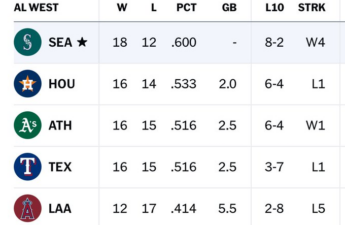
Tonight (or rather, the last night of September), I had the distinct privilege of listening to the full game of perhaps the most satisfying Mariner win all season. I mean, strategically it was unsatisfying, given that the M’s were eliminated from contention over a week ago. But Brandon Morrow nearly threw a no-hitter, Griffey hit a three-run homer in the first inning, and the M’s clinched a winning record for the campaign, leaving themselves an outside shot of passing the Rangers for 2nd in the AL West. And Rick Rizzs almost predicted a homer (turned out to be a triple off the top of the wall) on a precise pitch and then nearly had a stroke calling the play he had nearly predicted. All the while, I was reminded of how much I love listening to baseball in particular, how the quiet nights in my room with a game remind me of so many quiet nights in my room with a game from younger years.
The nights have been quiet lately largely because of Em’s efforts to acclimate herself once more to a studying routine, while I try to write and (much harder) find the discipline to code changes for the Blue Pyramid. Tonight, for example, I was working on the tedious conversion of the Book Quiz pages to the new navigation-bar format. I’m also trying to get the jump on the long-awaited Book Quiz II, which I’m hoping to have out by the time American Dream On is ready. The former could not be much less of a priority, however, especially by comparison, though watching the BP’s sagging stats always gets me back on my horse for a while.
Like anything, these projects – even Em’s studying – are all about momentum. Getting in a groove and then finding things satisfying or rewarding enough about that groove that make it worthwhile to stay there. Or, more accurately, to return there time and again, to recreate that space. When the space is wide enough, this is easily done with writing. Pretty much everything one does (or at least I do – perhaps I shouldn’t attempt to speak objectively about what may ultimately be a very personal experience) relies on the renewal of the font of momentum, the benefits of being in the zone. This is perhaps why so many people give up so completely in their place of work and general approach to a day job: the feeling of obligation alone is insufficient to charge the batteries that generally get their best fuel from excitement or passion.
Of course, obligations provide a fear factor and disciplinary onus that those who haven’t completely checked out come to rely on to keep them going through a day job work week. So a big part of the game of these two years is about revving the engines without overt obligation (though self-imposed deadlines help) and pacing oneself with the constant celebrations of milestones in writing, in coding, even in playing basketball or walking the cat (long story, but she needs to eat grass for her digestion). Debate, unsurprisingly, is taking care of itself. If anything, I need to find ways to limit my attention on the debate coaching side so it doesn’t consume the time required for everything else.
Why? Because debate is exciting, innately sort of passionate. It creates its own rewards very quickly. The thrill of one round, the excitement of even one well-answered Point of Information, these things are enough to charge months’ worth of batteries. I have had so many dreams in the past seven years about being back in rounds and wanting to savor a last competitive semester or year. Despite my interest in both, I have had no such heartbreaking dreams about the summer of 2001 or a chance to code a quiz.
The challenge right now, the challenge of a life lived creatively and deliberately in a variety of pursuits, is the create the fire of a competitive event in everything I do. And starting in four days, I won’t have baseball to distract/inspire me.
It’s starting to get colder. Already we’re starting to debate when we’ll have to bite the bullet and actually turn on the heater.