Archive for the 'Politics (n.): a strife of interests masquerading' Category

The Market Doesn’t Solve

Today I decided to try somewhere that wasn’t Stop-N-Shop for my what is apparently becoming bi-weekly grocery trip. This meant heading back over the Raritan into New Brunswick to check out C-Town, which would have been the local place to buy food had I wound up in any number of apartments I sought in NB before winding up in Highland Park instead. When I’d passed it a couple times doing exploratory walks to go with apartment visits, it had seemed a friendly enough place, bustling with young families and the like.

If you’ve never heard of Stop-N-Shop or C-Town, don’t be surprised. (I had never heard of the latter till discovering this locale.) For some remarkable reason, grocery stores seem to be one of the only commercial enterprises in America that resists nationwide consolidation into mega-chains. Sure, the somehow unrelated Wal-Mart and Walgreens have started selling food and getting into the action, but there is no universal grocery store chain. I grew up with Safeway and Albertson’s, only to discover upon moving east that these were unheard-of there. When I moved to New Mexico, entirely foreign names like Smith’s and Jewel Osco entered my lexicon. It seems entering a new part of the country always means discovering at least one completely unknown chain, such as when we drove to Maryland with Fish last year and came upon a cluster of Food Lions. Food Lion? Are you kidding me? The first five times he said it, I thought Fish was saying “Food Line“, which was a hilarious enough name for a grocery store without being the complete non sequitir that is the king of the food jungle.

Anyway. I get over the river, hang out at Chipotle, almost ask a girl in line out before I remember what my personality actually is, then head down to C-Town. Why it is called C-Town, I have no idea, but one theory that dawns on me as I enter is that the “C” stands for “convenience”, because this place doesn’t really look like a grocery store from the inside. The shelves are too small, the aisles too crammed, and the proportion of overpriced junk food too high. Needless to say, the clientele is also decidedly more down-to-earth and desperate than at the Highland Park Stop-N-Shop. The predominant language within is Spanish and the prices are… higher. Yes, higher for the poor folks in the poor neighborhood than in the spacious overlit aisles of the place across the river.

I don’t want to hear your economic arguments or your bias or your justifications or your excuses. I know that you could say that they have a higher risk of shoplifting to absorb, or have to guard better against break-ins overnight, or lose more carts on average than the swankier uptown place. If this were a debate round, I could come up with 12 good arguments to justify the higher prices in the poorer part of town too. But the bottom line is that, while it might not be C-Town’s fault per se, the fact that these realities exist, and are legion and provable, means that most people’s economic theories about escaping from poverty are bunk.

There’s a Shell station in Oakland that always has consistently the highest prices for gas, possibly in the entire state of California. We used to pass the place on the way to the Mexicali Rose quite frequently and would joke and laugh about what the astronomical figure would be today, continually flabbergasted that our outlandish predictions would always be trumped by the numeric reality before us. It goes without saying that this was in about the worst part of town we actually drove in when not looking for runaways from Seneca.

The problem is that the poor don’t have the mobility to get out of their neighborhood. Most everything has to be close because they are the least likely to have cars and spare time and the money to use public transit. And when grocery stores are really just slightly larger but still overpriced “convenience” stores, they get locked into choices that are less healthy and less auspicious, yes, but especially more expensive. Which means that the marginal dollar on necessities goes further for the rich than the poor. Making groceries an objectively regressive commodity in our society. Which would be less problematic if groceries weren’t, oh, the most essential commodity for people to buy in this society.

Yes, there are food stamps. But I’m willing to guess most of the Spanish-speakers in C-Town don’t have much access to food stamps or someone to explain to them how to get them. And the marginal cost still applies, for food stamps are priced by dollar of cost and not by nutritional value of item. So you’re still better off having food stamps at the HP SNS than the NB CT, if you’ve even been given access. Of course those close to the HP SNS are much more likely to have said access.

There’s a legion of documentation on the web about this phenomenon and how most poor neighborhoods (e.g. the Tenderloin in dear old SF) don’t have any grocery stores at all, driving the marginal dollar into liquor and Twinkies instead of even marginally groceretic junky food. And this means that getting out of poverty doesn’t just require saving money like it would for most people, it requires saving more money than most people. It’s these hindrances on economic mobility, along with the corresponding need to keep a certain quotient of the population in this marginalized state, that make capitalism insolvent.

I bagged up my items into the canvas bags I’d brought, zipped up my jacket, and decided to buy the rest of the housewares I needed online. With the internet connection that I have that gives me access to cheap things, without the depression of watching people struggle with being gouged for the barest necessities.


The New Brunswick C-Town, in a photo from Google Maps’ street view. Depression level is to scale.

Miles walked today: 2.5

Cheap Like the Budgy

Since a certain person who will remain nameless recently took a significant bite out of financial crime, I find myself facing wholly different circumstances on that front to go with my different circumstances on every other front. While part of the plan is to try to get a job that can offset things until I move somewhere affordable like New Mexico, part of the plan must also account for the possibility that I will be unable to get a job that works with my schedule. And even if I do, I don’t want to be spending a lot of reserve cash on this year.

As a result, I’ve made it a goal to spend at an annual rate of $20,000 this year. Which would be fine in our old housing situation, or in Nuevo, but is pretty difficult when I splurged on rent to live in a nice place in Highland Park instead of the sketchier parts of New Brunswick. I’ve been trying to think of spending in terms of a daily rate, to really break down what a budget looks like day in and day out. It’s by no means the first time I’ve tried spending on a budget, but perhaps the first time in eight years that it’s mattered this much.

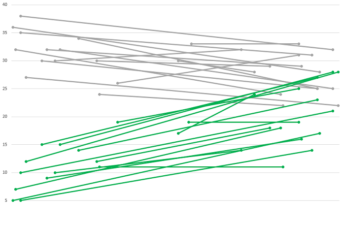
In a daily spectrum, $20k/year is $54.79 a day. So what does my daily expense chart look like?

$6.33 a day for everything else. Whew. Given that that includes food, this is looking like a tallish order. I managed to spend pretty cheaply in today’s trip to Stop-N-Shop, but the budget was blown by a necessary restocking of Emergen-C stockpiles brought on by the recent not-quite-so-miraculously-avoided illness. I’m already at the coughing (final) stage and the symptoms have been mild throughout, so I’m counting myself pretty lucky. At least I managed to find the latently elusive Lemon-Lime flavor. A whole new generation of debaters’ voices will be spared!

While the rent is obviously a mammoth share of that chart, it’s the insurance options in the 2 and 3 slots that make me the most bitter. Perhaps because it’s never done a bit of good to carry car insurance in my life, other than fulfilling a legal obligation to do so. Perhaps because my urologist is being pretty cavalier about my kidney stones (”I don’t know what’s causing them… maybe you’re eating too much dairy? Who knows? Fill this prescription and call me in six months.”) Perhaps because the whole concept of insurance as a bet against oneself can still send me into writhing anger if I sit in a room and think about it for ten minutes.

Emily would be quick to point out that the insurance is cut-rate because it’s still through her student plan. Which doesn’t make me feel any better about the onrushing mandate to purchase the insurance at market rates that’s waiting to swallow the country. Maybe rather than being thankful for being required to purchase insurance that defends against calamities, we should look at why there are so many precipitous financial calamities designed to befall people in our society.

Which reminds me that I really shouldn’t be whining about having $6.33 a day for food and extras (”extras” on top of cell phone, internet, and Netflix, mind you) in the context of the world at large. $6.33 a day is more than most people see for slave-labor style jobs that “free markets” are forcing them into. In the context of everything, I’m still awfully lucky.

Well, mostly. Even people in slave-labor style jobs probably feel capable of being loved.

Miles walked today: 1.2. Hey, I’m still a bit sick.


Follow-up: I of course just realized that I completely forgot about gas/electric, since I haven’t seen a bill from those guys yet. Yeah. Luckily heat’s included in the rent here (although it’s not on yet, so the space heater I’ve been running while sick isn’t included), but gas/electric for cooking and lighting is probably at least a couple bucks a day and maybe more at times. Maybe I should allot myself $25,000 a year? That seems like a lot. But it also has this ring of realism to it, given that I still need to buy a couch.

When I Fall

“Hang on to your wallet
hang on to your rings
I can’t look below me
something will throw me
I curse at the windstorms
that October brings

I wish I could fly
from this building
from this wall
and if I should try
would you catch me
if I fall
when I fall”

-Barenaked Ladies, “When I Fall”

A storm is blowing into Highland Park, New Jersey this evening. It’s a storm that’s ravaged much of the seaboard already, bringing warnings of flooding and overwhelm to parts north and east. All day, the barometer has been sliding down as the winds have picked up and the skies have conspiratorially bonded in varying realms of shadowy gray. There is a sense of proximity, of closeness, of the world drawing near. Closer, closer, now almost here.

The world truly has converged today across the Raritan River, in New Brunswick. A young man who’d just joined the campus where I coach famously plunged to his death from the George Washington Bridge, his wet broken body just identified this afternoon. His roommate’s filming of his romantic encounters with another man, streamed live on the internet, and his subsequent private jump, are probably the top story in America today. The media is here to discover everything they can and stream that live on the internet too.

Unsurprisingly, many of the Rutgers debaters and I have held an online debate in the wake of this last event about the nature of the media’s frenzy. While their sharklike gathering is certainly unsavory, this story at least exposes the peer conflicts and homophobia that are often rampant on college campuses and get under-reported. I can’t espouse the demands for the head of the roommate on a platter, but neither can I say this is a particularly bad use of media time, especially when compared to the disappearance of yet another rich blonde girl from such and such location. It remains to be seen how the spotlight ultimately treats Rutgers, how the university fares under its white-hot illumination. Our team was already scheduled to debate civility on campus in a public showcase next Thursday before this happened.

Tonight I walked into downtown Highland Park, such as it is, to do a little light shopping and look around the town. It’s cute and quaint and fall serves it well. While my ultimate destination was Stop and Shop for imminent practicalities like envelopes and soap and microwave burritos, I couldn’t help but tarry at the Nighthawk Bookstore, offering used books and music till midnight, five days a week. There seems to be a bit of community to this community, traversed by walkers of all kinds even in the billowing winds of an onrushing thunder. The distances are short and the buildings old, but there is life and vibrance and a kind of candle in the darkness. By the time I returned home, fleeing the first sprinkles and clutching the chafing plastic handle of the bag (my half of the canvas collection is still stuffed somewhere against cardboard), I was feeling almost okay about where I’ve landed. A ping-pong ball bouncing high in the air, fortunate to land, all but by chance, in a small town instead of the Hudson.

A hard rain’s a-gonna fall, make no mistake. I am debating between heading over to practice rounds in my car or toughing out my simulation of carlessness and walking against the slings and arrows of outrageous downpour, come what may. I think I’d like to feel the rain pelting against my jacket, soaking my hat, gathering in my eyes and hair as I trudge into an almost invisible future. There is a solace in storms, the promise of washing away all that has gathered and built in the corners and cracks and alleys of sunbaked neglect. Of renewal, reopening the ground to accept the life-sustaining promise of water, the emboldening prospect of wind. There is also power and fear, of course. The sudden randomness of a bolt of lightning, the crack of the bough as it snaps away from the tree in a particular gust. But even this breakage creates renewal. New buds, new life, new access to the sun that the formerly blocked were denied.

It is time for all of us to fall someday. And it is October tomorrow. The only question is how far we fall when the wind knocks us down.

The Curse of Idealism

What’s interesting about my perspective in contrast with others’ perspectives is that perception is often a long long way from reality. And the more I’ve thought about it, the more I’ve really realized that my sadness comes from my idealism. That ultimately most people are innately pessimistic/realistic and accordingly don’t have a very high bar of hope. And since they work on a given scale of magnitude where the potential highs are flattened, they don’t get sad or upset or angry that often when things fall short. Because it’s not that much to fall short from. Whereas I, with my ideals and hopes and high standards, my real understanding of what humanity could be capable of if they cared, get pissed when things go awry.

It’s an important observation, and one that I’ve made in various ways, but I want to sort of bookmark the clarity of my understanding of it now. I slept a good deal last night for the first time in possibly weeks and I awoke in the sort of haze-state of first consciousness with a new depth to my understanding that other people are mostly just slogging through a relatively high concentration of mud and pragmatism and low expectations and accordingly find it easy to be happy with little things. Someone doesn’t look at them funny or says something nice and that exceeds expectations by such a degree that it puts them in a good mood. They can be happy and satisfied with less. They aren’t sitting around chalking up every subpar interaction and comparing it against what could be done. And, most importantly and contrastingly from me, they aren’t trying to mine every decision they make or experience they have for ways to improve in the future.

It’s this last bit that becomes the really damning thing. For by taking the perspective that living is serious business and that we’re on the planet to learn and grow instead of just muddle through and muck about, I end up disgruntled a lot more often than people who don’t expect much of themselves. And people can expect a lot from themselves in a given arena without trying to really thoroughly pump every experience and detail for information and potential progress. I understand more and more how deadly serious and debilitating and strangling my perspective must seem to people who don’t share it. When do I have room for fun?

But the flipside of all this, of course, seems to be the manic side, wherein I end up enjoying things in a purer, even more childlike way than most anyone I know. Most others seem afraid of expressing excitement or enthusiasm. And I think that’s related to the idealism too. If one doesn’t let oneself hope or dare to dream, then the potential ceiling on any experience is pretty low. It’s not that wildly captivating to get to have a good time, because that time is capped by the mucky muddly realities of the species and the planet. It reminds me of Russian and the fact that the word for happiness doesn’t have a permanent state – most folks are wandering around only hoping for fleeting satisfactions and thus can’t throw themselves into really enjoying them full-throttle in the way of a childlike idealist.

It’s easy to look at all this and say that I just haven’t grown up. That part of growing up is about moderating one’s emotional highs and lows or even the conviction or belief that emotions matter at all. But the ability to maintain childlike wonder, appreciation, hope, and idealism is what separates everyone I respect and admire on the public scene from everyone else in the world. Gandhi, King, and all the writers are people who objectively never grew up. They were visionaries, luminaries, people who could see beyond and above and had greater faith and higher hopes than anyone else thought practical. You can look at the lesson of their lives and say look, they just got a bullet for their troubles, proving that this is all mucky and muddly and useless. But I disagree. I think it’s clear that these are the only people who make our species worth discussing at all. Would that we could be judged by these examples rather than their assassins, rather than the practical doers who only aspire to sell out a little less this time.

I refuse to settle. Even if it kills me. If I die because of it, then I die once. But if I settle and compromise my ideals, I die every time I wake up and face a new hopeless day.

Threads

If I ever make it, creatively, meaning that I get to the point where I not only am expected to write more for a public audience but that some people consider making movies out of my stuff and I may even get some control over who’s involved, I’m giving first crack at film adaptations to Johan Grimonprez. It’s taken him only two movies in twenty-four hours to earn this honor, dubious as it may currently be.

For the unfamiliar, which should be everyone (Gris?) and would’ve been me a day ago, he’s made only two real films in English as far as I can discern, but they’re both appallingly good. One’s playing at Albuquerque’s barely-breathing Guild theater in Nob Hill by the university district, 2009’s “Double Take”, a film ostensibly about Alfred Hitchcock, but much more about the Cold War, power politics, media, and what’s going on with the planet. My Dad and I saw that last night and had to come home to find his other film, 1997’s “Dial H-i-s-t-o-r-y”, which is about 9/11. Except it was made four years before 9/11. But watch it and tell me it’s about anything else. You can find it online; you may still have to pay to see Double Take.

Almost exactly halfway through editing The Best of All Possible Worlds, putting me well behind the expected pace at this point, though that indicates a general enjoyment of this trip that has made it all worthwhile. The themes for the book are finding resonance in all kinds of places, not least perhaps in the Grimonprez movies, all of which means that either the book is scarily relevant or I’ve just got it on the brain. Reality is probably a mix of both, but it’s generated a comfortable excitement for me about the work that has prompted this very lax attitude about actually getting the editing done. I think once I get on the plane tomorrow and head back to the East, it’ll be time to just put my foot down and get work done. If only so you all can have some idea what I’m talking about.

In the last couple months, I’ve found it harder than any prior point in my life to focus on reading one thing. In the midst of watching Dial H-i-s-t-o-r-y tonight, I realized that I’ve been carrying around Don DeLillo’s White Noise in my backpack since buying it alongside If On a Winter’s Night a Traveler in Ariel & Michael’s favorite Philadelphia bookstore. All I want to do tonight is start it, setting aside editing yet again and certainly bypassing The Spire and War and Peace and Madness and Civilization. Prior to this year, I don’t know if I’d ever gone more than a week or so reading multiple books at once and now I’m on the precipice of starting a fifth simultaneous book. I don’t know what’s wrong with me. I mean, sure, I’ve lost some interest in all of them in one way or another, and maybe that’s the problem, that I haven’t just given up on most of them. What does it say about now or my state or something else that I seem incapable of completing readings while churning out novels of my own? Why am I losing interest so quickly? How will I be impacted when I head to Liberia and have to hole up with books for days on end, according to what Emily has led me to believe about the schedule there?

Speaking of which, it’s the first anniversary of our seven to date that Emily and I have been apart. It’s enormously challenging, but I take some solace in the nice round joy of the sound of seven years. A marriage is forever, but it takes some time for its lifespan to start sounding like something that reflects the permanence and seriousness of the commitment it contains. I’m not sure quite where the threshold is, but seven years seems a lot closer than any of the prior milestones.

Been spending much of this leg of the trip discussing the nature of God with my Dad, working out Jumbles and crossword puzzles with surprising interest and aptitude, downing green chile and old memories in equal measure. Just a moment ago, I landed, and already the plane station looms with its promise to whisk me back away. The tighter I hold on, the more sure I become of the need to step back, relax, put it all in context. Watch my Mom knitting in the comfy corner chair. Pull the threads.

The Use of Energy

Today, after watching some thrilling but ultimately disappointing World Cup matches, I wanted to start editing my book and I was also hungry. I considered walking in to town, but a thunderstorm was predicted for the afternoon and my hunger was threatening to derail me on the roadside en route to food. I decided to drive to Zorba’s, a falafel place (I’m sure they have other food, but it’s a falafel place to me) and then take that food to the Princeton Campus Club, a repossessed former eating club just off the Princeton campus.

Zorba’s was doing its usual middling business, but the PCC was a ghost town. The three floors of gigantic rooms were completely empty, though the building had been unlocked. And blasting away throughout was the air conditioning, cooling the outside humid 85 degrees to something more like 70 amid much noisemaking. At least the lights were off for the most part.

I ate my falafel in silence while reading a bit of Madness and Civilization, then threw away the bag it had come in and the wrapper and the chip bag, able to recycle the class bottle of Orangina I’d had. Then I went upstairs to the PCC Library, which was just as cool, and cracked into editing The Best of All Possible Worlds for the first time, completing 5% of it while there.

I spent maybe an hour and a half in the building all told. No one came, no one left. The air conditioning persisted through every room of the gargantuan club, a place that may sit idle for days at a time, though they’re keeping it open till midnight or two in the morning apparently. Just trying to make it comfortable in case someone comes in to enjoy the hallowed halls of what someone built as an alternative to eating with the proletarian Princeton students in the regular dining halls.

There are times when I think that I might be a bit too cynical about the hope for change on this planet. When I might underestimate what one single individual without power or fame or voice can do to stem the tide of immense corporate waste and collective mismanagement. Then there are days like today, when I find myself to be a bit naive, all told, in comparison to the real depth of the state of things.

On my way home, I drove by a dying squirrel, flattened and twitching on its back in the roadway.

Public Service Announcement

If you haven’t seen it already, please immediately proceed to your local video/DVD rental dispensary, be it brick-and-mortar or online, and watch “The Corporation”. If you have to, download it from somewhere. I’m sure the movie’s creators wouldn’t mind.

It apparently came out in 2003, but it looks like it was just produced yesterday. If anything, its being seven years old justifies a little bit of its naivete in places, though it usually counterbalances this with an appropriate amount of cynicism. It prominently features Howard Zinn, Noam Chomsky, Michael Moore, and Naomi Klein. It has probably never been more relevant than it is right now, in the wake of the BP spill, at a time when it seems like many are starting to understand the depths of the problems innate to capitalism.

Unless, you know, it gets more relevant in 2011 and 2012. Which I’m afraid it will.

We now return you to your regularly scheduled Thursday night.

It’s Outrage Time

Something snapped when I saw that bird picture. It looks like my Dad had a similar experience. I bet you did too. The series of heartbreaking photos capturing a generation of pelicans whose deaths are just the opening salvo in a slaughter of untold proportions unfolding on the Gulf Coast.

It’s of little significance when compared to the American slaughter of Afghans and Iraqis, but it’s still something. It’s something to consider that if the oil keeps gushing till August or December, as they’re saying now, that maybe every single beach in the world will somehow be impacted by the endless stream of our greed for petroleum. This isn’t something esoteric about the future, ten, twenty years. Not even as debatable as global warming or the extinction of species. It’s the end of beaches, coastlines, oceans. For as long as the potential for something like this exists, unchecked, it has every reason to happen repeatedly in the future, until we’ve nothing left to show our children but the few sickly animals we’ve salvaged for zoos, or perhaps the handful of species considered lucky enough to save for ritual slaughter and consumption.

It’s to this end that I’ve made manifest the first thing that struck me when I saw the outstretch-winged pelican, how closely it resembled the flag of its home state. And so I am presenting five new designs of Blue Pyramid Merchandise, not as opportunism so much as an outlet for outrage. I feel better knowing that I’ve been able to convey what I feel in something simple, and that someone else might take small solace in the power of this harnessed anger.

For as has been clear from Duck and Cover lately, clear from anyone thinking carefully about this issue, it’s not about BP. It’s not about the particular company or group of individuals who made this one incident happen. It’s about a system, a way of life, an approach to the Earth and its contents that is innately unsustainable and always has been. The sooner we realize that all drilling is wrong, that all oil companies are doing ill, the sooner we can stop the nonsense of trying to ream one scapegoat while we sow the seeds of tomorrow’s disaster.


The Goal of Humanity

I have long discussed the fact that the goal of humanity, both collectively and individually, is to overcome human nature. That basically everything we consider to be harmful and undesirable is derived from the baser instincts of human beings and that, at the point of sentience, the goal of people should be to stop evolving and to start making mental, philosophical, and moral transformations based on rational thought.

It shouldn’t be a controversial perspective, but it seems remarkably un-universal, especially given the recent surge of belief in science, physicalism, and a reductionist materialist view of the world. So many people now seem to argue that there are great benefits of our human nature and natural instincts, that trying too hard to control or convert the hedonistic nature of our animal selves will create more problems than its solves. Of course, these people tend to put happiness at the keystone position of their ethos and seem particularly ill equipped to explain how humanity is going to make any progress in the fields of moral or rational thought.

I am writing all this now because I recently found one of the most brilliant articles ever on this issue, which makes the case for my perspective more succinctly than I tend to, and in a way more befitting of mainstream appeal. You can read the article here now. Be forewarned, it’s longish, but the details matter and it’s length is sort of part of the point anyway.

The article is more concretely about patience and the ability of people, largely young children, to delay gratification. The case constructed by the psychologists in the various studies profiled in the article is that people’s willpower and ability to distract themselves into changing their own motivations – the essence of self-control – is perhaps a larger factor for success in humans than intelligence itself. And that where intelligence feeds self-control and vice versa, the most essential building blocks to fulfillment and self-actualization are to be found.

I have been telling a lot of people lately that the difference between my ability to write multiple novels in a year (not done yet, but looking awfully promising at this point) or hold down jobs while impressing my employers on the one hand, and being homeless and destitute and an utter failure on the other hand, is entirely because of my ability to fabricate meaning for deadlines in my own head. I mean this statement completely sincerely – the most important skill I have devised in my life has been the ability to believe in an arbitrary date and accord all the significance in the universe to it. Throughout high school and college, I never missed a single deadline for a single class (except for the one I deliberately failed, of course, but that was its own little experiment with self-control), because I convinced myself that doing so would lead to immediate failure, expulsion, and possibly death. I played an extensive eight-year game of chicken with my consciousness, starting papers later and later, studying less and less, but I still turned everything in the minute it was due, without fail.

This has of course translated into me being able to motivate myself for artificial deadlines (imposed by self or others) at work and especially in my new free-form writing life. I thrive on deadlines, at least when they’re realistic. I feel a great deal of adrenaline around the approach of a deadline, the elation of getting things done, and every successfully met deadline has worked as an extra bulwark for both the need for me to continue making them and as a positive motivation from the pure euphoria I feel when they are met.

I don’t think I ever deliberately tried to create this spirit about deadlines, but the article above corroborates my thesis that this trait alone has kept me off the streets and in a relatively stable place in society. But the most important aspect of the article is the evidence that this can be taught. What’s frustrating about the article is that it then starts to raise doubts about the idea of teaching this kind of self-control and willpower, even though most of the article makes it abundantly obvious that this can be learned, and pretty easily, especially at a young age.

The article also relates the issues of self-control and willpower to drug use and overeating, which are pretty obvious correlations. The fact that I’ve been able to live my entire life without alcohol, tobacco, or other drugs, to control any impulse to try them even once, to be able to rationally evaluate the decision and overcome impulse, is highly linked to the deadline thing. And all of these things are truly essential skills for living a fulfilling life, especially if one is also prone to addictions or falling into long sustained periods of inextricable obsession.

The most disturbing aspect of the article, though, is that it still pays homage to the materialist demons that haunt every aspect of the modern psychological community. The researcher who pioneered the study of willpower through the use of marshmallows, whose thinking has led to such important conclusions about humanity’s struggle to overcome its base nature, is most excited at the moment about… brain scans. He wants MRI’s to spit out little illustrations of the self-control fold in the brain so he can give people drugs or surgery to shortcut them to it.

And here is where I have to part ways with the nature of the experiment. It may be that there seems to be a physical reflection of the phenomenon of being able to believe in arbitrary artificial self-imposed deadlines. And it may not. If it is, it’s still putting the cart before the horse, for the fact is that these things can be taught and that would change the folds of the brain. The entire problem with the materialist approach is that it tries to do things backwards, tries to manipulate people as bodies without giving them the understanding of what they need to change that will build a lasting commitment to the new approach. Even if you could surgically create the folds, there’s a larger chance that they’d just change back and re-alter their brain afterwords. This is why so many people who get major life-changing weight-removal surgeries tend to end up putting the pounds back on, while people who actually train themselves to approach food differently can lose weight and keep it off.

So now the goal of humanity is to not only overcome our human nature, but to ditch our desire for a physical solution to every problem. We’ve long recognized that the human mind is the most complex and fascinating aspect of our world. We should offer it the respect and due diligence it deserves, not try to play Frankenstein to its monster.

Onward, Hypocritical Soldiers

I’m pretty frustrated with the American dialogue about religion. This is nothing new, I guess, but when the supposed super-liberal bastions that are alleged to more occasionally take my side are diametric agents of anger, then it’s time for me to talk about it.

It all started this morning, when this article from late last week caught my eye on Google News. The article in question is on the Huffington Post, the place known for being too liberal for my friend Greg in criticizing Barack Obama from time to time. Anyway, the point of the article is to list ways in which Christians tend to be bad Christians, while all the while touting their Christianity. This seemed like exciting, relevant stuff.

The first one on the list was as follows:

1) Too much money. “Wealthy Christian” should be an oxymoron. In Luke 12:33, Jesus says, “Sell your possessions and give to the poor.”

What a great start. I was sure that pacifism would be next on the list.

But instead, most of the rest of the list was about being judgmental, about being holier-than-thou. And interesting critique, and probably valid, but certainly not tops on the list of “Ways Christians Tend to Fail at Being Christian”. And certainly not needing to occupy half the list in repackaged titles like “Too invasive of others generally.” followed by “Too invasive of others personally.” Pacifism, meanwhile, made no appearance on the list.

Which is troubling, because Jesus might be the all-time pioneer of pacifism. Turning the other cheek is not exactly pro-war, nor is loving one’s enemies, one’s neighbors, or blessing the peacemakers. (And by “peacemakers”, Jesus was not referring to missiles.) While I’m not a Christian, it’s arguable that if Christianity really propounded the teachings of Jesus on non-violence, I would be. It would almost be worth the other trappings of organized religion to be associated with such a doctrine.

Of course, that’s not what the modern Church does, especially in the United States, where most congregations set aside a small part of every Sunday to pray for the success of those men and women engaged in killing Iraqis or Afghans. And while it’s obvious that most modern Christians fail to give unto Caesar that which is Caesar’s and cast as many first stones as they can, the whole supporting murder thing seems just the slightest bit higher up the chain in terms of transgressions.

None of this would be so bad, of course, if I didn’t have to hear the flip side of the hypocrisy on my local NPR station later in the day. On today’s “Talk of the Nation”, they hoped to examine the issue of how to make the disenchanted youth in various American Muslim communities resistant to what they called “Jihad Cool”. But as the last caller aptly pointed out, the story had morphed from an examination of negligent forces inside certain fundamentalist communities to an outright assault on Islam’s tenets as a religion. The main guest, who had recently written a lengthy piece on the wife of the alleged would-be Times Square bomber, waved off this critique and said that Muslims need to recognize they have a chronic problem in all their communities.

So where are the people saying there’s a chronic problem in the Christian communities, the flag-waving groups making their children available as willing foot-soldiers in the imperialistic struggle to claim the Middle East for American corporations? Why don’t we have radio programs explaining that a weird conflation of nationalism and Apocalyptic evangelical fundamentalism has been heavily influencing foreign policy, leading to the slaughter of thousands? Is it because this fundamentally really is just another religious war, just another Crusade draped in supposedly secular flags?

Maybe it’s because the alleged terrorists getting caught up in alleged jihad never actually kill anyone, but they do it locally. While the people who drive to work in America and then direct the actions of lethal drone planes half a world away kill hundreds, usually innocent, but do so in a region so esoteric and physically distant that it feels more like a video game than a war.

It’s time to pray, all right. But not for the reasons you might think.

Democracy Done (Mostly) Right

If you believe there’s a world outside of the United States and you’re somewhere you can be reading this blog today, you’re probably aware of the fact that there was a parliamentary election in the United Kingdom of Great Britain and Northern Ireland yesterday. And it’s resulted in a hung parliament, meaning that no one party got a majority.

How can this be possible, ask Americans, those incapable of believing there are more than two parties? Because not only are there three substantial parties in the UK, each garnering more than 20% of the nationwide popular vote, but there are actually 10 parties who earned seats in the British parliament this go-round. And three more who had a seat, but lost it. Plus a true independent, unaffiliated from any party.

For decades, the only independents able to win seats in the American Congress have been those who drop their major-two-party affiliation after establishing a long career. The lone possible exception to this is Vermont’s Bernie Sanders, a Social Democrat who knows well enough to run as a straight independent in our system. Because apparently voting in large blocs for a third party is as appealing as hemlock for the American public.

What about the British system engenders this kind of vibrance in their democracy? Part of it must surely be involved with the proliferation of nationalist factions in different regions of the country. Northern Ireland, Scotland, and Wales each have a seat-winning nationalist party that advocates moving toward dissolution with the mother country, one of them to the point where they refuse to even take the seats that they win. But this isn’t the whole story. There are other factional parties, even the Greens, who win seats in Parliament. And there are three enormous parties who get to share the national stage.

One could argue that part of it is about the size of the constituency. The average MP represents 75,000 people, while the average US Representative votes on behalf of 650,000. That’s pretty much a scale of magnitude difference and ensures the people with particular local or factional appeal are left out of the system altogether. And while it’s hard to imagine a US Congress housing thousands of representatives, maybe an intermediary body could be forged to give a more robust voice to the people.

Granted, there are significant issues with the British system as well. For one, the fact that the Prime Minister stems directly out of the parliamentary majority means that people must choose between prioritizing their local representative over their Prime Minister selection or vice versa, if they prefer respective candidates from different parties. They may love their local Labour MP and want Nick Clegg of the Lib Dems to take over 10 Downing Street and they are forced to choose between these desires. Not ideal.

Additionally, the lack of proportional representation in favor of regional apportionment means that the relative influence of parties is often grossly misrepresented. This is most obviously illustrated by those Liberal Democrats in 2010, who earned 23% of the vote and just 9% of the seats. Meanwhile, the Conservatives got 47% of seats for just 36% of the vote and Labour won 40% with only 29%. The only argument I can see against proportional representation is the idea that it will limit the influence of specific regions or constituent areas.

But this argument fails on face empirically. Most of the specific regional parties would actually increase their influence under prop rep. For example, the Scottish National Party (SNP) won 6 seats, but would be awarded 11 under proportional representation. In fact, every party winning seats would still win seats under that system, plus four more. And people would have even more reason to vote for smaller parties, knowing their vote would count no matter where they voted or what the status of their constituency might be.

So there’s a lot to be learned from the British system, as well as much that could be improved. I think my ultimate bottom line is that we rebelled from a system with more robust democracy to create our own. Granted, the colonies weren’t being particularly enfranchised at the time, but we could’ve waited to be part of a system with a double-digit number of contentious parties. And such a system, when it produces hung parliaments like this year, ensures that every tiny party could potentially be able to get enormous concessions from the major power players.

It’s almost enough to make you start dredging the waters for tea as well as oil.

Thursday Round-Up

From time to time, I feel the need to post a rambly cattle-call of happenings in my life and links around the web. I should start designating a day to do this and making it something like a regular feature, but that would probably require me approaching this blog with the discipline of a professional columnist.

  • It seems I don’t write much about politics here anymore, largely because of the twin forces of Duck and Cover and TMR getting first crack at my political musings. I almost cross-posted this commentary on Obama’s lack of Socialism here, but instead I’m just linking it. Enjoy.
  • As promised yesterday, I recently put up the APDA Nats brackets for 2010, complete with results of submitted brackets from current APDAites. (Those distant from debate should note that this is not how APDA Nats is actually structured, but a hypothetical based on the NCAA basketball tourney.) This hasn’t generated as much discussion that’s gotten back to me as I expected, but I’ve heard rumors that people are still enjoying it from afar. Given that I’m on a bid to become Tab Director of Nats 2011, this will probably be the last of these I do for a while… it seems a little weird for people involved in the Nats tab staff to publish a ranking of debaters partaking at that tournament, which is why I didn’t do one in 2007.
  • The last two M’s games have been amazing. I missed the Tuesday game because I was doing prep work with the Rutgers team for Nats, but yesterday’s was a real gem. I am a huge fan of the new additions to the team, including the fact that Milton Bradley seems to be happy and ready to produce for this team. But Chone Figgins is threatening to become my favorite Mariner. Between the steals and the walks, he reminds me of Rickey Henderson so much it’s ridiculous. And I loved Rickey Henderson. But he seems to have even less of an ego than Rickey, which was the latter’s one annoying trait. Then again, Chone isn’t exactly contending for the all-time steals title.
  • Did, in fact, get our taxes in on-time, yesterday. We do owe both states a little money, and TaxAct scammed us out of more money than they should have. But it’s done and the Feds owe us a lot.
  • I wonder if the West will characterize this bombing as “freedom fighting” while everyone else utilizing these methods are “terrorists”.
  • My mental state and health have continued to be somewhat subpar in recent weeks. The main issues seem to be a general feeling of dissociative malaise and surreality that may just be endemic to April, and also migraines. I’ve been averaging about 4 migraines a week, an astounding spike in frequency that seems inexplicable when observing normal triggers and factors. This combines uncomfortably with this dreamlike sense of reality that’s overtaken much of my last 2-3 weeks, which may partially be related to the subject matter of the current novel I’m working on. (Though I haven’t been working nearly as much as I’d like, but I’m mostly doing plot work to enable really cramming on output in the next month or so.) I feel largely like I’ve been looking at my life from 30,000 feet, or at least 30 feet, watching myself live instead of actually being in a first-person view. It’s strange and makes me sound completely nuts. I’m not completely nuts. I just feel more like I’m living through a filter than that I’m actually fully here. I sort of feel that this reality is all illusory anyway and that life’s core realities are a little like our souls playing a video game (but with meaningful consequences) on this planet, so maybe I’m just more aware of that reality.
  • The other explanation for the above issues, of course, may be that there’s something seriously wrong with my brain. I’m inclined to think otherwise, but it’s good to keep all the possibilities in mind. I’ve told Emily to keep an eye out for me behaving really erratically or out of character, which would be indicative of a possible brain tumor. I’m not actually that worried, though, because the migraine symptoms have been so classic. (Though such symptoms also mirror those of tumors and aneurysms somewhat.) The other factor that I entertained was that I was somehow drinking decaf coffee – that the batch of Folgers I’m working through is either mislabeled or contaminated somehow. Because honestly, foggy worldview, increased tiredness, and more migraines could all be explained by caffeine deficiency too.
  • Debate Nationals this weekend – always one of the most exciting times of the year. I’ve attended 7 of the last 11 nationals prior to this one and this weekend will make 8 of 12. For all that I probably should feel a little strange about being so old and having seen so much on APDA, I really feel nothing of the sort. I think I’ve been in the work world long enough to understand just how meaningful and valuable I find the APDA community to be, to treasure how rare its intellectuality is. I’ve been thinking a little about how much work I’ve put in to the Rutgers team, all unpaid, and realizing that I don’t see any of it as a chore. I think this is what it would be like to really love one’s job, because I do it all voluntarily. I’ve worked for organizations I truly love before, but never felt this way about the actual work. If the writing doesn’t work out, I need to figure out a way to swing professional debate coaching. Possibly in Africa.

April Come She Will

New image up top. Refresh the page if you can’t see it. If you still can’t see it, well, here it is below:

One of the subtler overall changes on the page, going with a relative simplicity that reflects my effort to refind some focus. I’m not that far off, not all over the place, but still not quite as centered as I’d like to be. Ever since I got back from Virginia (all of 48 hours ago), I’ve felt a bit foggy, rather dissociative. As though this is all a big dream I’m about to snap awake from. Not all of it, as in the last 30 years, but all of it, maybe most of the last 48 hours. It’s odd.

Of course, in part, it’s April. Every April, I get to thinking and hoping that maybe it won’t be so bad, so strange, so despondent. Most Aprils, I have to remember that there’s a reason I have this whole time-is-a-place theory going. This time round, at least, I have two insanely busy debate weeks back-to-back to keep me distracted. And then it’ll be time to enter the home stretch of a book that feels like it’s not quite off the ground yet. This month may yet prove to me that two books a year is a more reasonable expectation than three.

But I’m still hoping otherwise.

This past weekend was pretty debate-heavy as well, if only because it takes about 13 hours to drive round-trip to and from Charlottesville, home of one of the better campuses in its absolute peak time. Arriving in Virginia under an 88-degree sky was pretty much just what I needed at the time and I thoroughly enjoyed the tournament there, in no small part because of Rutgers’ great successes. Not only did Dave break for the second straight weekend and the third in the last six, but our newest novices were second novice team and both made the top ten novice speakers. And Dave & Chris managed to establish that they own 7th place, having finished exactly 7th all three tournaments they attended together. One could do a lot worse, especially for a junior-freshman duo. The tournament also just managed to be a bunch of fun, I got to judge many good rounds, and everyone was generally in high spirits. Although the less said about Friday night the better – suffice it to say that it’s easy to block out the worse parts of college over time and thus even harder to when they’re re-presented to you.

The only good thing about April, consistently, other than debate Nats I guess, is the start of baseball season. And what a great start it was today, with the M’s almost coughing up a win only to demonstrate they might have enough offense this year after all. Watching Chone Figgins and Casey Kotchman come through so consistently was great. I am going to have a lot of fun watching this team run this year. It was all almost enough to make up for the heartbreaking NCAA Finals, though that itself was such a great game. And both of these were big uppers compared to the amazing but horrifying video that Russ has up on TMR.

That video was on its way to sending me into quite the tailspin. If you don’t want to make the jump or want to know what you’re getting into first, it’s basically 40 minutes of American military chatter about 11 unarmed civilians that were slaughtered in a 2007 incident the US denied knowledge of until very recently. This is followed toward the end by a triple-missile attack on a building that also seems filled with civilians. It’s perhaps the most chilling piece of video I’ve ever seen in my life. As bad as it is to watch 11 people killed (and trust me, one sees them shot and killed), it’s probably worse to hear the live reaction from the people committing the murders. In some ways it feels like a vindication of all the things I say about people in that situation, but I’d really rather just be wrong. Perhaps most compelling of all is the vision of the blurry lines between video games and reality for a whole generation of American soldiers. The whole situation, from the dialogue to the monochrome target-screen, has the look and feel of a sophisticated first-person shooter (I mean, think about that phrase as a genre of video game on face there for a second) and one gets the sense that the people killing can’t quite get over the psychic break between the surrealistic setting and the fact that what they’re doing is all too real. But maybe that’s just wishful thinking; maybe they know full well and are just that awful and/or manipulated.

In any event, I’m still struggling with it. It’ll be with me for a long time. It’s encouraging to know that there are people who would post it, who would make it available, who would spread it around, though part of me almost feels like it’s an Orwellian exemplification of how much can be gotten away with. Still mulling.

The cat’s sick and we took her to the vet, who knew no more about why she was sneezing and wheezing than they do about my migraines. But they gave her some medication, just like me, and wished her the best. There was a lot else on my list to do today, but I only did about three other things. My brain refuses to be still and yet won’t move quickly either. It’s pickling in a jar, just for a time, letting itself soak up the brine between the folds like some grimy spa catharsis. As though to gird itself for April and all it entails. As though to make the push into the depth of where I need to go to really fulfill The Best of All Possible Worlds.

I don’t like pickles.

A Fresh Start

I don’t want to talk about healthcare today. Not much, anyway. It’s weird to be in a maelstrom of euphoria that seems so unwarranted and unfounded, touched with a counterpoint of ludicrosity almost as bizarre. It’s a little like the day Obama got elected, I guess, except I at least understood that there was potential there (since unrealized) and history in the mere fact of America’s ability to overcome the deepest depths of its historical bigotry. But this? This? This is just alienating.

I watched some of the debate last night on the computer, mostly because Em had it on. I guess I didn’t watch so much as listened, heard the same rhetoric over and over on the lips of one Representative after another. One side, then the other side. One side, then the other. It, like all political discourse, was simply a sorry excuse for debate. If only APDA could show them how it’s done, show them what a real discussion with advancement of ideas and engagement of the opposition’s points looks like. But our opportunity to do that was squandered by a few paranoids who became more concerned that their God-given right to drink on Friday nights might be impinged by documentation of their ability to rise above 99% of elected officials in the ability to cogently discuss an issue. So it goes.

You, unless you’re one of about 3-4 people I could imagine reading this (or you’re not an American), are either euphorically happy today or you think the country you used to love is sliding into socialism. I am baffled in either case. I am baffled at how you could love a healthcare bailout that exchanges a few token sacrifices of the worst health insurance practices of the past for the great unknown of the egregious health insurance practices of the future. As though you can start trusting profit-driven companies once they’re given the free license to do whatever they like (save a couple small things) in the pursuit of free-enterprise on the back of the mandated poor of America. If this bill was so terrible for the health insurance industry, why did stocks go up today? And I’m even more baffled if you equate a requirement that everyone buy something from a private company with socialism. Socialism isn’t some ism word that you can just throw around whenever it suits your purposes. It means something, and it does not mean entrusting everyone’s health and fate to greedy corporations.

Ahem. I didn’t want to talk about healthcare.

I wanted to talk about writing.

Namely, The Best of All Possible Worlds, currently chugging along at a sprightly 48 pages through 18 days of work. Those of you scoring at home may note that this is less than three pages a day, which doesn’t necessarily mean good things for the original deadline of 17 May 2010. (The same pace maintained from here till then would yield 200 pages total by said date, which is a bit on the skimpy side.) At the same time, I’ve had a lot of distractions, including not having the thing mapped out at all. Which is certainly burdensome in some cases, but really exciting in others.

It also must be noted that the equivalent day in the life of American Dream On was 26 June 2002, when the novel was not only well short of 48 pages, but was also two-thirds of a decade shy of completion. And while there’s a chance I will look back ruefully on this post about the best-laid plans for the Best Of, I have reason to believe otherwise. It’s something about that freshness, that not knowing where everything is going.

I mean, I know where it’s going, ultimately – I think it would be pretty challenging to start a book without knowing the ending, more or less. What would be the point? The point might end up being something one disliked, and it takes a pretty apolitical free-thinking writer to be cool with that. No, I know where it’s going in the end. But how precisely it gets there and what happens along the way are largely opaque to me. Or they were on 5 March when it all began.

In the mere two weeks and change (it feels like months, actually, which must be good) since, a lot of the mystery has gotten solved. Things have come to light that seem like the obvious inevitable answer all along. Little loose ends are coming together. And there’s still a majority yet to figure out, but the way things are clicking, I have faith it will all coalesce nicely in no time.

What’s great about this is that, while the location and discipline are the same, the method is quite different from ADO. And yet it’s still working. My biggest concern in abandoning Good God earlier this month was in going off-script, in risking everything to an ad-lib process when I’d enjoyed such success with a paint-by-numbers spreadsheet scheme. And, indeed, this process is even looser than Loosely Based, which was somewhere in between. I had nursed the ideas for LB for less time than the current project, but I had them more fully fleshed at the time of the opening lines. This one is pretty much being made up as I go along.

It’s exciting. That’s really what it comes down to. I remember this conversation I had with Lisha at the Academy about our little ventures into independent English study in sophomore year. Our high school was trying to take its best English students and give them the opportunity to go off-book, to write assignments individually assigned at a higher and specialized pace. We still would go to classes as normal and read the same books as everyone else for discussion, but then do independent analyses or creative projects on the side. She was working with Pat Scanlon and I with Eric Moya – I forget if anyone else was doing this, but I think there was at least one more person. Served us all right for turning in extra short stories and papers to our prior year’s English profs.

Anyway, she was talking about a long and arduous conversation with Scanlon about a particular work she’d turned in for the independent study and related that he’d lamented her inability to find writing to be fun. And then Lisha and I digressed into a long sidebar about what it would mean for writing to be fun in the sense the prof meant. What it came down to, as I recall, was that nothing in an academic setting like that could be fun in the sense Scanlon wanted to elicit. That there was something innate to the academic context, to exterior-imposed deadlines and requirements, the necessitated bludgeoning most of the enjoyment out of the process. Even in an independent study.

The Academy abandoned the project and we resumed normal classes the next year. I would resume the debate about academic bludgeoning of writing with many more people and went on to a four-year college career without taking a single class in the English department.

Writing this novel is fun. I am having fun. Not fun-relative-to-other-things. Not fun-for-writing-which-is-quite-a-chore. Honest to God fun. Like playing a video game fun. Debating fun.

Not debating on the House floor fun. Real debate fun. Just to clarify.

Why I Don’t Believe in Representative Government

Forty-seven million Americans are without health insurance. Why? Because they can’t afford it.

And what’s Washington’s solution? Require people to buy private insurance with the government providing a subsidy to the health insurance companies.

What a pathetic state of affairs that our national government cannot respond to the needs of the people and must first respond to the needs of Wall Street and the health insurance industry and their stock prices.

-Dennis Kucinich, 21 January 2010, e-mail to supporters

Ah, politicians I once believed in. I hardly knew ye. The last bastion, the last hope, he has abandoned me.

Bill Richardson? Long gone. Barbara Lee? Recently departed. Dennis Kucinich? Et tu?

In case you don’t like politics or the US or healthcare (and don’t subject yourself to them daily anyway as part of some scheme to at least keep a cartoon going, you should know before we go further that Ohio Representative Dennis Kucinich flipped his stance on the healthcare bailout. He’s now voting for it.

Not only is this a big deal for Kucinich and his few fans like me, many of whom (not me) were pouring money into his 2010 reelection campaign for being the only spiny liberal left in the country, but it’s done something almost no other Kucinich headline has been able to do: grab the top billing on American news outlets. Not near the top or up there, but A#1. If only his resolution to end the War in Afghanistan could have done the same.

Despite the words that headline this post, Kucinich today sent an e-mail reversing his decision and noting that Obama and Pelosi helped convince him that moving in some direction, any direction, on healthcare was more important than standing up for ideals, progress, or the progress of ideals.

Of course he didn’t use those words. He waxed on about his past concerns and noted that he wasn’t totally assuaged. He discussed the need for further pushing, knowing full well that there will be no further pushing for anything if and when a healthcare bailout package actually passes. He talked about how torn he was, what a struggle this vote was. But yet, he had been convinced.

We may never know what actually tipped the scales for Mr. Kucinich. It may have been a threat, it may have been a promise. But the problem is that Kucinich, like every other person in government, has things they care about more than representing their constituents, more even than representing their ideals. Everyone has a price. Maybe Obama said he wouldn’t run anyone against Kucinich in the primary, eliminating his need for all those campaign contributions. Maybe he threatened to run ads blaming Kucinich for every person who doesn’t have healthcare in America in the future, because we all know that not supporting a busted broken solution makes you automatically responsible for every problem said solution wouldn’t solve anyway. Who knows? The point is that when you have fallible vulnerable individuals in positions of power, they are susceptible to pressure. And they cave.

Just as Bill Richardson, one-time peace negotiator, found ways to explain proliferation of militant US hegemony to the UN. Just as Barbara Lee found it in her heart to reverse her vote on the bank bailout, something even Kucinich wouldn’t stoop to. But now he’s found his selling point.

This vote isn’t even about healthcare, really. It is a little. But it’s frankly more about his Afghanistan resolution. The point is that selling out the left has to cost Obama something. If it doesn’t, he can continue to embrace Bush-administration policies with impunity. If Obama wins healthcare and every single far-left member of his own party supports it, then all is lost. It’s a blank check for Iraq and Afghanistan, maybe even for Iran when the time comes. It’s tacit approval of any direction he wants to take the party. No matter how centrist, how hawkish, how corporation-friendly, Obama will be able to count on the vote of the (actually!) Socialist Senator from Vermont and the pacifist vegan Representative from Ohio. At which point, there’s really no point.

I still have hope that the healthcare bailout will fail, despite even the most pseudo-radicals of the Democratic Party getting in line. It’s not because I want people to suffer or because I don’t think access to humane treatment and medicine is a basic human right. It’s because no corporate giveaway in human history compares to the mandate that people be legally required to purchase something so expensive as health insurance from a private profit-driven corporation. And nothing would impact price escalation so steeply as to offer such guaranteed demand with no corresponding checks on price. Yes, the private companies would no longer be able to resort to their nastiest tricks in conspiring to kill people. But they also would have nothing preventing them from doubling the cost of their legally necessary product every year either. Especially when their other avenues to profit (those nasty tricks) were being shut down and they could argue that the whole economy would fail if they didn’t raise rates.

Beyond any of these moral issues, it’s a Ponzi scheme. America’s been investing in healthcare stocks like crazy, boosting claims of a recovery, because profiting off of suffering is the only business left in America, via either healthcare or the military. So if we boost up the corporations with a fat deal for them, the stockholders make money. And then they make more money out of squeezing more money out of everyone, who’s mandated to pay, and the only way to offset it is to… invest in more healthcare stocks! Yay. Everybody wins.

I guess I shouldn’t have been so mad at Dennis after all. He’s going to make everybody rich.

A Thousand Words

It’s not exactly people bringing down the statue of Saddam Hussein, but this kind of image is being levied to the American people as a sign of the grand liberation they’re bringing to a backwards and otherwise hopeless land in “the good war.”

But let’s let this picture speak for itself a little, shall we?

First off, we have a major offensive into a town/city that’s been described as ranging from a population of anywhere from 50,000 to 125,000 people. Presumably this is the town square, a patch of green field that may be what fallow poppies look like. If you’re going to have a ceremony for a city this size, it’s safe to say you’d pick a place reflective of the grandness of the city itself. This is a place that makes abandoned pueblos in New Mexico look like thriving modern metropolises.

Where are they hiding all those people?

If you look up Marja, you’ll find a hastily assembled Wikipedia article with no images and a discussion of the 2010 offensive, a vague 1950’s reference, and the latitude/longitude coordinates of 31°31′N 64°07′E. Plug those coordinates into Google Maps and you get an image of a dirt triangle in the middle of green fields like the one in the image above, revealing enough housing for at least 5,000 people scattered over an area the size of a small county. Where did all those people go?

Scroll around a bit and you’ll find an actual city, Laskar Gah, in the northeast of the region. But this is not the city of the offensive, not the site of the resistance, not the area in dispute. South of that is an actual fortress, the ancient stronghold of Qala Bist with its famous arch and corresponding inspirations.

This is not being billed as the war for Laskar Gah, though. It’s a war for poppy fields, like those depicted in our ceremonial flag-raising above. Look at all the guards on each side of the tiny ceremony. Surely they have to guard a formal ceremony in a land known for suicide bombings, right? This makes sense. But, uh, why are they facing toward the crowd rather than away from it? How does that make sense? They’re not guarding against a marauding individual who comes careening in to spoil the party, but rather preparing to gun down anyone in the dense packed crowd who makes a false move.

Which, frankly, doesn’t make any sense either. After all, with the crowd this closely packed, you couldn’t even see into the middle of the crowd. And that’s where a clever suicide bomber would be. With this density and proximity, they’d probably be able to wipe out the whole thing with one explosive. The fact that this didn’t happen indicates there was probably quite a perimeter and possible strip-search at the gates of this gathering. Which makes sense, but then why the inward-pointing guards?

The message of this picture seems clear to me. There just aren’t that many people in Marja, at least not that many who want to be associated with the ancient flag. The flag is fringed with gold, tinged with the blood of civilians who died for an uncertain future, liberated from their lives made miserable by the same invaders who ended it all. Is it any wonder you can’t get more people to come to this party?

There may not be stars and stripes on this flag, but there are wreaths of wheat. The flag waves over the amber waves of grain in the distance, planted to cover up the opium, cover up the still warm bodies of the dead. What if they threw a flag-raising and nobody came?

Thursday Thoughts

1. It is looking increasingly likely that the Mariners starting rotation down the stretch (and into the playoffs, if applicable), will be headlined by these three starters:

I mean, I know about counting chickens and all that, but still. Assuming Bedard gets signed and is healthy (two enormous assumptions, I’ll grant), this may be the best starting trio the Majors have seen in decades. You can keep your Sabathia/Pettitte/Burnett. I’ll take Hernandez/Lee/Bedard any day.

2. It is startling how much more productive one can be when one is neither sick nor has to deal with insurance companies. I didn’t even notice how much spare energy I was expending trying to get healthy and/or deal with the fallout of 2009’s various accidents until I spent a full afternoon without either task. Very liberating and bodes well for all future projects.

3. The Dow has seen five digits for the last time in a good long while. Prepare accordingly.

I’m Alive (Breaking a Long Silence, on the Occasion of the Passing of J.D. Salinger)

It will either happen today or February 14, 1958 when I am sixteen. It is ridiculous to mention even.

When people in my generation haven’t been in contact for a long time, or haven’t posted to their webpage or other expected forms of social media/communication, they tend to break the silence with the phrase “I’m alive” or, less frequently, “I’m not dead.” Where this custom originated is hard to trace, like any viral meme of our culture, but it is surely prevalent. When my father took a long absence from posting on his page, a relative wrote in fear that something had happened. It’s hard to argue that this is the frequent concern of people when a long absence is experienced, but our society tends to “go there” pretty quickly. J.D. Salinger is probably about as far from a social media type person as I can imagine living into the twenty-first century.

On November 22, 1963, Aldous Huxley and C.S. Lewis died. No one particularly noticed because John F. Kennedy was shot that day as well.

In a discussion of next steps for my new novel American Dream On, my father purported that the fifty best books written in the last hundred years were never published. I told him that if I believed that, I would give up all hope. And while part of my disproof for his theory is The Catcher in the Rye, part of his rebuttal might include the unpublished works Salinger has famously kept in a safe for much of the last few decades. My excitement for the release of these works is perhaps the only heartening element of the developments of Wednesday.

I want them to have a nice time while they’re alive, because they like having a nice time… But they don’t love me and Booper – that’s my sister – that way. I mean they don’t seem able to love us just the way we are. They don’t seem able to love us unless they can keep changing us a little bit. They love their reasons for loving us almost as much as they love us, and most of the time more. It’s not so good, that way.

When I was 18, I compiled a list of the hundred best books of all-time. All Salinger’s four published works made the cut, ranging from 10th (Catcher) to 61st (Franny and Zooey). Catcher had slipped to 12th on my list by 2002, but checks in at 5th on the composite list of 73 Blue Pyramid friends and visitors. Franny and Zooey is 69th. In 2008, I finally got around to compiling my favorite 17 short stories of all-time. They were bookended by Salinger works from Nine Stories, with “A Perfect Day for Bananafish” checking in 17th and “Teddy” 1st.

J.D. Salinger was born in 1919. Ray Bradbury was born in 1920. Richard Adams was born in 1920. Kurt Vonnegut was born in 1922. Howard Zinn was born in 1922.

Salinger’s obituaries were coated with accounts of his life as a recluse. These overshadowed any particular discussion of his works and their enormous qualities. His life was discussed as the story of potential gone bad, of talent gone crazy, of a light of the world snuffed out by his own misanthropy. There were the isolation and the lawsuits and the affairs and the urine-drinking rumors and everything beneath tepid notes about Catcher that still couldn’t resist citing the man who shot John Lennon. And censorship. Outcry. Controversy.

But I wouldn’t have had to get incarnated in an American body if I hadn’t met that lady. I mean it’s very hard to meditate and live a spiritual life in America. People think you’re a freak if you try to.

I haven’t been posting Duck and Covers lately because my scanner is broken. It used to have trouble, but now it seems completely ka-put. My phone line has been out for days, too, if you’ve been trying to get ahold of me. It keeps saying the line is in use and when I pick it up, the dialtone is replaced by a noise that sounds like someone is on the other line, but has set the phone down for a bit. I’d imagine it generates a perpetual busy-signal to anyone who tries to call. It’s had trouble like that before, where it hangs up on anyone calling in, but with this problem I can’t call out either.

Ray Bradbury and Richard Adams are still alive. They are hoping to turn 90 this year.

Salinger had allegedly promised the release of all his unpublished works upon his death, though it’s unlikely his estate will grant the right of others to hijack Holden Caulfield for use in an examination of what he’d think of being alive at 70. My suspicion was always that he didn’t want someone to write that book because he’d already written it, but that remains to be seen. Unfortunately, it remains to be seen over a devastatingly long period of time to come. Were there any justice in the publishing industry, all 15-20 tomes would be released in quick succession, maybe one a month, a cavalcade of Salinger’s views on the world we’ve lived through for the last half-century. But at their pace, we’ll be lucky to live long enough to read all of Salinger’s already written work. Hell, they haven’t even released The Pale King yet… nor do they plan to for 15 months.

My sister was only a very tiny child then, and she was drinking her milk, and all of a sudden I saw that she was God and the milk was God. I mean, all she was doing was pouring God into God, if you know what I mean.

On January 7, 2010, I sent American Dream On to twenty-two volunteer readers. Five more have since added themselves to the list. As of today (January 29, 2010), only three have finished reading the book. None of them have full-time jobs or are attending school.

On January 27, 2010, Howard Zinn and J.D. Salinger died. Between these two events, President Barack Obama addressed the nation on its State for the first official time in his tenure. He noted that “it’s tempting to look back on these moments and assume that our progress was inevitable – that America was always destined to succeed.” He seemed to be warning against impending calamity. He went on to conclude that “We can do what’s necessary to keep our poll numbers high, and get through the next election instead of doing what’s best for the next generation. But I also know this: If people had made that decision 50 years ago, or 100 years ago, or 200 years ago, we wouldn’t be here tonight. The only reason we are here is because generations of Americans were unafraid to do what was hard; to do what was needed even when success was uncertain; to do what it took to keep the dream of this nation alive for their children and their grandchildren.” His dire tone about America’s future was belied by his eternal affable smile, made somehow more Bushlike by its inappropriateness while trying to empathize with unemployed families or explaining why US soldiers will continue to kill Afghans after a decade of doing so. Bush at least kept the smile to the corners of his mouth, always on the verge of an inappropriate grin. Obama’s grin seems to crest, convincing you that he’s really enjoying himself up there despite the calamity he portends.

Salinger’s reclusion begs the question of why one is writing at all. He insisted that he enjoyed writing for himself, noting notedly in 1974 that “There’s a marvelous peace in not publishing. Publishing is a terrible invasion of my privacy. I like to write. I live to write. But I write just for myself and my own pleasure.” With all appropriate apologies, Jerome, this is phony. You were being a phony when you said this. People who believe that do not write. They sit around and think their own thoughts. And if they do write, if they do find some pathological urge to put their thoughts to paper because they love the artisanship of crafting the idea despite not wanting to share it, they insist their works get burned upon their death. Or they burn them themselves, just to make sure. (You’ll note Kafka, who was not born in the early 1920’s, never did this.) Certainly they do not insist their works are published upon their death. People who do that cannot live with the repercussions of their misunderstanding, Jerome, but they also cannot live without trying to be understood. Without trying to share what they have to share with the world. So I see that. I see you. I see that you could not face the same tribulation and misunderstanding that plagued Catcher, that plagued Holden. But you had to try anyway. You had to try to get out a message, to be understood. Which is what we will wait for, obnoxious greedy publishers’ delay or no.

For example, I have a swimming lesson in about five minutes. I could go downstairs to the pool, and there might not be any water in it. This might be the day they change the water or something. What might happen, though, I might walk to the edge of it, just to have a look at the bottom, for instance, and my sister might come up and sort of push me in. I could fracture my skull and die instantaneously.

In February, Emily will return to classes and I will start writing Good God and the Rutgers team will start debating again and I will buy a new scanner/printer and get my phone fixed and I will turn thirty years old. In February. Which is still three days hence.

J.D. Salinger, Kurt Vonnegut, and Howard Zinn fought in World War II. Richard Adams was in the British Army for the duration of the war, but did not fight in it. Ray Bradbury was writing science fiction stories.

We write to be understood. No matter how hard that is, how long the odds are, how impossible it might seem. His literary agent said “Salinger had remarked that he was in this world but not of it.” It is hard to imagine a more fitting epitaph for this writer, for any writer. But being in creates an obligation, an obligation to try to be understood. He tried. His works will try. The only reason to write, really, is to make contact with other human beings. He was a coward, perhaps, or made a desperate failed attempt not to let personality overshadow works which he wanted to speak for themselves. But he wanted, wants, will want, to be understood.

Halfway down the passage, a stewardess was sitting on a chair outside the galleyway, reading a magazine and smoking a cigarette. Nicholson went down to her, consulted her briefly, thanked her, then took a few additional steps forwardship and opened a heavy metal door that read: TO THE POOL. It opened onto a narrow, uncarpeted staircase. He was little more than halfway down the staircase when he heard an all-piercing, sustained scream – clearly coming from a small, female child. It was highly acoustical, as though it were reverberating within four tiled walls.

Compassion Complacency: On Haiti

Before I even begin this post, I feel the need to disclaim it in some way. I expect this to be controversial and difficult and that some people might get offended. Please don’t get offended. I’m exploring an idea here, something real that I feel. Don’t jump to conclusions or rush to judgment or do all those other things that people often do about emotionally charged issues. And keep in mind that you read this voluntarily.

With that out of the way, I have something to say: I am, overall, saddened by the tremendous outpouring of attention being given to Haiti.

It’s not that I’m a fan of earthquakes or human suffering or that I like chaos or people dying in the streets. Quite the opposite of all that is true. I want nothing more for this world and its people than for everyone to be free from violence, have access to life-sustaining items (food, clothing shelter), be equal, and find meaning in their lives. Obviously this earthquake impedes all those things and as such, I am against it.

Nor am I against compassion. Almost everyone in America has gone nuts over this thing, especially in my generation, plastering Facebook and (presumably – I don’t Twitter) Twitter and all manner of social media with widespread appeals for Haiti. Donate donate donate. Get involved. Show your support. It may be the first thing that’s actually eclipsed the troops in terms of universal sentiment in this country. Everybody – everybody – loves and/or feels bad for Haiti. And I agree. I also feel bad for Haiti, though perhaps not as much or in the same way as others, for reasons I will soon explain.

Indeed, one could make the argument (and I expect it) that such an overwhelming demonstration of heartfelt mourning and sympathy is one of the best things to come out of America in years. It demonstrates that we can overcome proclivities to racism, imperialism, and just general indifference to come out of the woodwork to show our support and fork over our cash. That Americans are fundamentally selfless, volunteerist, the most generous people on Earth showing up to once again offer their benevolence to a wounded world less fortunate than ourselves. And there’s a grain of truth to all of this, to be sure. I guess I’d have even more to complain about if this earthquake had happened and no one noticed at all.

The problem, though, is that the suffering of the people of Haiti is not particularly special. It’s not unique. It’s not all that different from the ongoing daily suffering of hundreds of millions of people worldwide. What it is, if not unique, is sudden. And close.

The closeness argument is a little weak, I’ll grant in advance, because there was admittedly a pretty big outpouring of donations and support for the tsunami in southeast Asia a few years back, although Facebook and Twitter weren’t really revved up then. Although there are devastating earthquakes in rural Iran all the time that don’t exactly get America’s juices flowing. But sure, Iran is hardly as poor as Haiti, so maybe it’s fair.

But the suddenness is what I want to focus on. Most of why people in America feel compassion for what happened is because people were going on living their (admittedly pretty miserable) lives one day, and then suddenly the world caved in and everything was much much worse. And unlike a hurricane with advance notice and evacuations, unlike anything predictable, there was nothing anyone could do to get out of the way. They were just there and then the next minute, everything fell over.

There is something very particular in the American psyche that I believe this kind of event triggers. Not only do people subconsciously link it to something like 9/11 in their mind – the day they remember the world falling over – but it’s something that can happen to literally anyone. It’s something that not the remotest Republican (okay, well maybe there are some people who believe that earthquakes are God’s wrathful judgment, but let’s leave out the Pat Robertsons of the world) could say was the fault of the people left victim by it. It is utterly blameless, utterly unavoidable. And this makes our compassion go crazy.

Great, right? We should have compassion for people whose world falls over through no fault of their own, who could have done nothing to predict or avoid the calamity. Right?

Yes, absolutely. But there’s also something insidious about this particular kind of compassion, especially when contrasted with its glaring absence in other equally warranted circumstances. Because it implies a particular worldview about dessert and outcomes and how much control we perceive to have over our life conditions. Very few people were spamming Facebook and Twitter with calls for aid to Haiti the day before the earthquake. Even though Haiti is the poorest country in the Hemisphere, is extremely close to the US, was even the site of US military involvement not so long ago. Haiti features 80% poverty and 50% illiteracy. Some estimates say a quarter of a million children have functionally been sold into slavery to combat the poverty of their families. By any measure, Haiti was in nearly as bad straits before the earthquake as after.

Okay, sure, this is perhaps a slight exaggeration. And I understand the argument that this kind of tragedy striking a place already in such dire circumstances is what makes this situation special. But the magnitude of the difference between conditions there before and after the earthquake is dwarfed by the magnitude of the difference in American perceptions before and after.

And I think it’s because we all fear earthquakes and think they could happen to us, but we don’t fear becoming an impoverished nation. Even after the housing crisis and the stock market plunge, I couldn’t find a single person who thought the US would lose control of its top-drawer economy to the point where poverty would be considered a widespread issue. And even though many Americans made great strides in the last 18 months in understanding they had less control over their economic circumstances than they thought before, almost no one was to the point of feeling like their standing was really legitimately in jeopardy, let alone the country’s.

Earthquakes don’t discriminate. They aren’t attached in people’s minds to moral worth or work ethic or financial holdings. They just hit and knock things over. Although, of course, the reason an earthquake like this kills so many people in Haiti and not in, say, San Francisco is because of all the disproportionate wealth accumulated in the latter and not the former. But people aren’t calling for aid to all the other poor countries where an earthquake might hit, anticipating that this could save millions of lives yet untaken. They’re calling for aid as a mental insurance policy, because they fear natural disasters themselves and want someone else to help them if they’re in that situation.

But because we get only one life each on this planet, it’s much harder to see that one could’ve been in the situation of being born in Somalia or Bangladesh, let alone Iraq or Afghanistan. Because one wasn’t born there, so it seems unrelatable. I haven’t even touched the issue of relating to the earthquake-like devastation that the US has itself caused in these countries with direct military action, let alone the de facto devastation of exporting imperialistic corporate kleptocracy. Yes, people talk about all these things. But in isolated pockets, as quiet outliers. Not in the kind of mainstream full-force universality currently being bolstered for Haiti.

And there’s the argument that this will set the precedent, that this kind of compassion will get a whole bunch of people eventually looking at the causes, the poverty, and applying these arguments to other countries. No argument – the compassionate outpouring will ultimately do a great deal of good for America’s understanding of others. But when it’s offered only (or vastly disproportionately) to victims of natural disasters and not of poverty or human violence, I think it also does a lot of harm. It reinforces our conceit that we’re above most of the human concerns, that we’ve somehow evolved beyond them or overcome them merely by greedily accumulating wealth and entrenching poverty elsewhere. It blinds us to the fact that we are largely creating the problem by being immune to it.

Not only are we not immune, but our immunity (to the extent that it exists) is an accident. The accident of birth. Which is every bit as accidental as an earthquake. An earthquake can hit anywhere, but you could have been born anywhere. And when people start generating compassion for everyone born in a bad situation, for everyone whose devastation is no less severe but was wrought by systems of violence and impoverishment, then we’ll really be getting somewhere.

Butterfly Wings

It’s been a strange day.

Last night proved to be a thoroughly redemptive exercise in basketball, as my streaky shooting caught fire and I played the way I always want to play, ever the more grateful for the opportunity to play ball the way I used to when I had 9 consecutive years of unfettered access to a gym. Overnight, I struggled a bit with the writing but managed to crank out the requisite short chapter, #50 of 60 overall. Ten to go in eleven days – still not much margin for error.

But today I decided to continue tearing up the promotional charts for the Book Quiz II, both because it’s a relaxing counterpoint to creative writing and it seems to have made some traction with parts of the blogging community that enjoyed the Book Quiz. But it’s also led me to at least three profound interactions with how said quiz has impacted people.

The first was not a direct impact at all, but made the most stirring impression. This individual posted his Book Quiz results (Ulysses) under the titular banner of “No One Understands Meeeeeeee” in August 2007. Less than a year later, he took his own life. The events are unrelated, of course, other than the obvious cry for help in a blog post about a silly Internet quiz. But it was one of those things that prompted reflection on quizzes as a Rorschach test – there’s nothing particularly isolating or crazy about the Ulysses description (it’s not like he got One Flew Over the Cuckoo’s Nest), but he chose to focus on said feelings in relating his titling his post. Given the background color, the blog URL, the general demeanor of all the posts, there were plenty of signs. But it still made me think. And a bit sad that someone who had taken the Quiz was dead in such a manner. Which is silly, because so many people take the quiz and so many people die. But it still felt like something.

The second post to grab my attention was considerably lighter in tone and effect. This was a piece of fanfiction in which the author had envisioned his two chosen characters driving while taking the Book Quiz on the passenger’s laptop. I really enjoyed it, not because of any abiding love of fanfic, but because the depiction of online quiz-taking was so realistic. Well, leaving aside the spottiness of wifi in a moving vehicle. I guess there are those catch-signal-anywhere cards like Brandzy uses.

But the final post was most directly related to the process and mindset of quizzes, their creation, and impact. It was this serious meditation on the impact that the Book Quiz had had on the husband of the blogger who had really enjoyed said quiz. Her husband, a diagnosed sex addict, had gotten Lolita on his second try and was deeply disturbed by the description and its echoes to misperceptions of his disorder. The blogger duly noted my disclaimer (something I had actually considered dropping from the BQ2 because it seemed sort of superfluous when I’m not making fun of countries or states), even to the point of titling the whole post “The Fine Print”. I was pretty moved by the whole narrative, ranging from she and her friends spending much of a hike discussing their BQ results to her husband’s torment at what felt like another rejection of his misunderstood problems. And she comes to a pretty salient conclusion: “When one takes a silly quiz, one agrees to step into the rabbit hole of the mind of the creator and play by the rules of his Wonderland. Taking someone else’s quiz requires that you suspend your disbelief for a few minutes and listen to the advice of the Hookah Smoking Caterpillar.”

Which of course is no small part of the point and something I’ve taken flak for in the past. People have written me upset by the political nature of a given answer or the clearly biased perspective I’m bringing to the table. Some have gone so far as to say that Duck and Cover should just be about cute animals and not have a political message or disagreeable content. Yet I wouldn’t be doing any of these things were it not for their political potential. All meaningful speech, like all meaningful art, is political – and here I mean “political” in the broadest possible sense of that which attempts to change others minds about society or its implications, not the petty squabbling of factions or status quo powers. I remember someone getting infuriated at me for saying that too, but I don’t see how any other perspective is coherent. Everything is trying to change someone’s mind about something. That’s the point of us all being here together instead of on our own individual planets.

Which is not to say that I wanted the blogger’s husband to feel bad about himself or the suicidal person to feel more alone. So maybe I’m failing in my political aims. Though it must be said that no small part of the aim of the quizzes is to bring lightness into people’s day, or just to stir up thought and reflection. Which I think all three examples achieved, in some way, to say nothing of the countless mundane posts celebrating the accuracy or decrying the randomness of the quiz just taken. If nothing else, the quizzes seem to have a remarkable ability to prompt introspection, which is maybe the most political aim I’ll ever espouse.

The more we think, especially about our own attitudes, perspectives, and approaches, the more hope we have.

« Previous PageNext Page »